
Why ‘Buying a Side Hustle’ Is Only the Start
Most advice stops at “choose a side hustle” or “buy a course/app/kit” and assumes success follows. In 2026, purchases are entry tickets, not finished products. Treat every side-hustle purchase as a compound asset: a bundle of knowledge, tools, rights and connections you must convert into cash flow. That shift in mindset—buyer as builder—determines whether the purchase becomes a recurring income engine or a dusty download on your hard drive.
Start by cataloguing what you actually acquired: intellectual property (course modules, templates), platform access (apps, marketplaces), physical goods (starter kits), community access (forums, masterminds) and licence/usage rights. Each element has a different monetisation pathway and a different decay rate. Understanding the components lets you prioritise what to activate first and where to invest time to preserve long-term value.
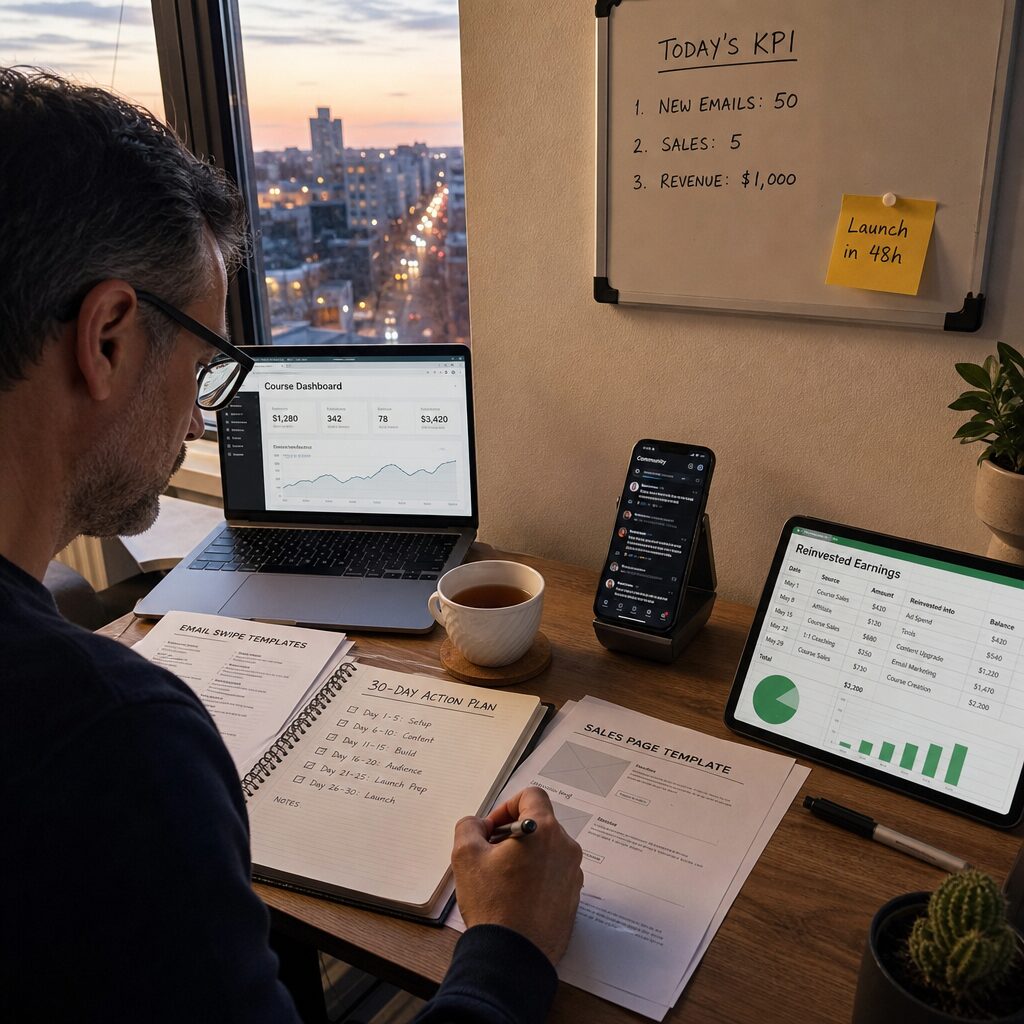
A 30-Day Activation Plan to Maximise Immediate Value
Week 1: Audit and strip down. Open every file, read every welcome email, and list three target customers. Remove or mark content you’ll never use. This prevents busywork and focuses your energy.
Week 2: Ship a minimum viable offering. Convert a single lesson, template or service into a one-page offer you can promote in 48 hours: a paid pilot, a gig on a marketplace or a weekend workshop. Validate demand before overdeveloping.
Week 3: Systematise delivery. Create checklists, templated messages and a 45–60 minute delivery workflow that you can repeat without heavy lift. Systematisation reduces time-per-sale and raises profit margins.
Week 4: Reinvest the first receipts. Use early revenue to buy targeted ads, a pro tool or a specialist freelancer to automate a bottleneck. Reinvesting fast compounds returns and accelerates product–market fit.
Extract Hidden Value: Repurpose, Repackage, Relicence
Most side-hustle products include modular assets ripe for repurposing. Turn a 90-minute course into a three-part email funnel, a microbook, and a paid Q&A clinic. Break down long-form content into short vertical videos for social channels to drive low-cost traffic.
Repackage for adjacent audiences. A course on freelance coding could be repackaged into a corporate upskilling workshop for teams, priced higher and sold to fewer clients. Explore relicencing: offer a white-label version of your templates to agencies or allow resell rights to micro-influencers for a revenue split.
Look beyond direct sales—licence checklists to software vendors, create a certification exam for community members, or bundle your tools with complementary services. These secondary revenue streams often deliver steady income with little ongoing work.
Network Effects: Use Communities to Amplify Value
Community access included with purchases is frequently underused. To extract value, become an active node: answer questions, post case studies, host a free micro-event. Visibility inside a community converts goodwill into referrals and joint ventures.
Create a referral framework: a simple affiliate link, a shared webinar or a co-branded offer with prominent members. Offer micro-incentives—exclusive templates or early-bird slots—for people who bring paying clients. This turns one-off purchases into recurring pipelines driven by social proof.
Automate and Delegate to Scale Time-Leveraged Income
Once your offer is validated, replace time with systems. Use automation tools to handle onboarding, billing and basic support. Chatbots and AI-generated responses can triage queries; human intervention should be reserved for high-value interactions.
Delegate tactical tasks to contractors or junior freelancers on fixed-price gigs rather than hourly work. Train them using the very checklist and templates you created during Week 3. A small operations manual turns single-person hustles into miniature businesses you can scale or sell.
Measure What Matters: Simple KPIs for Post-Purchase Growth
Forget vanity metrics. Track three KPIs: revenue per active customer, conversion rate from first contact to paying customer, and time-to-fulfilment (hours spent per sale). These numbers tell you whether to tweak pricing, improve funnels or automate delivery.
Set a 90-day ROI target before you buy anything in future: clearly defined revenue goal divided by total outlay (purchase price + your time cost + promo spend). If your activation steps cannot plausibly hit that target, don’t double down—iterate or pivot.
Common Traps and How to Avoid Them
Trap: Cherry-picking features without shipping. Solution: Prioritise one monetisable feature and launch it fast.
Trap: Treating the purchase as a learning project rather than a business. Solution: Put a price on your time and run paid experiments from day one.
Trap: Over-reliance on a single platform or community. Solution: Own multiple channels—email list, a small paid cohort, and at least one marketplace—to reduce platform risk.
Trap: Ignoring legal and licence terms. Solution: Review resale, white-label and geographic restrictions before repackaging or relicencing assets.
Two Mini Case Studies: Real Ways Purchases Turned into Ongoing Income
Case A: A buyer purchased a ready-made social-media content pack and turned it into a subscription service. By automating scheduling, offering tiered content packages and adding a monthly analytics report, the purchaser converted one-off buyers into a retained client base and tripled monthly revenue within four months.
Case B: A buyer acquired a paid course on micro-SaaS and used the course templates to build an initial MVP. They launched a low-cost pilot to ten local businesses, iterated quickly, then licensed the SaaS blueprint to agencies across three countries. Revenue diversified into consulting, SaaS licences and training workshops.
Next Steps: A Compact Playbook You Can Use Tonight
1) Inventory: List every asset you bought and classify it by monetisation potential. 2) One offer: Create a single, clear paid offer you can launch in 48 hours. 3) System: Build a one-page delivery checklist and a templated email series. 4) Promote: Reach out to five people in your network or community and ask for feedback or pilot customers. 5) Measure: Log your first KPI set and commit to one improvement cycle each week.
Follow these steps and you’ll rarely leave money on the table. Buying a side hustle is an investment; treating it like an asset to be optimised earns the interest.
![Como viver com menos do que você ganha [sem se sentir miserável]](https://productivepathblog.com/wp-content/uploads/2026/05/How-to-Live-Frugally-PTqOcG-559x1024.jpg)
