
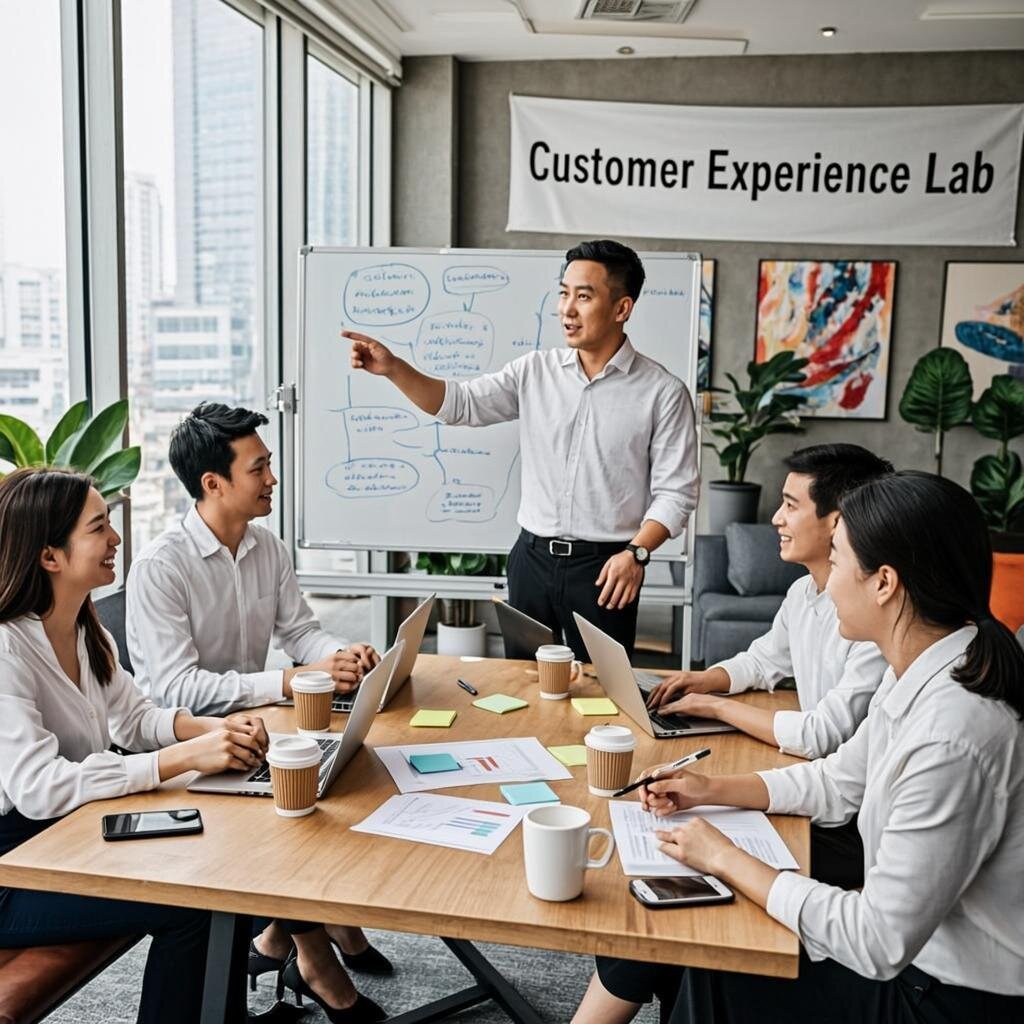
The Unexpected Marriage of Side Hustles and Customer Experience
When we think of side hustles, we typically picture individuals supplementing their income through freelance work, online selling, or gig economy apps. However, a fascinating trend has emerged in 2026 that’s turning this assumption on its head. Forward-thinking businesses have begun strategically incorporating side hustle models into their operations—not as revenue streams per se, but as powerful tools for transforming customer experience.
The logic is surprisingly elegant. Side hustles thrive on agility, personalisation, and niche expertise—precisely the qualities that modern consumers crave. By adopting the side hustle ethos within corporate structures, companies are discovering they can offer the kind of bespoke, responsive service that was previously impossible at scale. It’s a development that’s reshaping how we think about the relationship between entrepreneurship and customer satisfaction.
The Rise of ‘Corporate Side Hustles’: Micro-Services That Delight
Several innovative companies have begun encouraging employees to develop what internal documents call ‘corporate side hustles’—small, experimental service offerings that exist alongside core business operations. These micro-services are typically developed with minimal bureaucracy and maximum creativity, allowing staff to address specific customer pain points they’ve identified through frontline experience.
Consider the case of a major UK retailer that allowed its store managers to develop bespoke personal shopping services for elderly customers in their communities. What began as one manager’s side project in a Sussex branch evolved into a nationwide programme that dramatically improved customer loyalty amongst an underserved demographic. The key was treating these initiatives as side hustles rather than corporate mandates—they grew organically, driven by genuine passion rather than top-down strategy.
This approach has proven particularly effective because it mirrors the authentic, personal touch that makes traditional side hustles appealing to consumers. Customers aren’t interacting with a scripted corporate initiative; they’re engaging with someone who genuinely cares about solving their specific problem.
Partnering with the Gig Economy for Hyper-Personalised Experiences
Beyond internal experiments, businesses are increasingly partnering directly with side hustle providers to enhance their customer offerings. Hotels are collaborating with local food entrepreneurs to offer guests authentic culinary experiences that go far beyond standard room service menus. Retailers are working with independent personal stylists to provide bespoke fashion consultations. Even healthcare providers are connecting patients with wellness coaches who operate as side hustlers.
These partnerships allow businesses to offer specialised services without the overhead of hiring full-time specialists. More importantly, they create customer experiences that feel curated and personal rather than standardised. A guest staying at a hotel chain in Manchester might receive recommendations for a side-hustle baker who creates custom breakfast pastries based on their dietary preferences—an experience that simply wouldn’t be possible through conventional corporate operations.
The data supports this approach. Recent studies suggest that customers who engage with these partnership-based services report satisfaction scores up to 34% higher than those using standard offerings. The side hustle economy, it turns out, provides businesses with a vast network of passionate specialists who can elevate customer experiences in ways that internal teams often cannot.
Side Hustle Incubators: Empowering Frontline Innovation
Some of the most successful companies in 2026 have established formal ‘side hustle incubators’—programmes that provide employees with resources, time, and sometimes even small budgets to develop customer experience improvements alongside their regular duties. These incubators operate on the principle that frontline staff often have the clearest view of what customers actually want, yet rarely have the freedom to act on those insights.
One telecommunications company implemented a scheme where customer service representatives could spend up to 10% of their time developing side projects aimed at solving recurring customer complaints. The results were remarkable: employees developed everything from simplified billing explainers to community forums where customers could help each other troubleshoot issues. These side hustles, born from genuine frustration with existing processes, delivered customer satisfaction improvements that traditional top-down initiatives had failed to achieve.
The psychological benefits are equally significant. Employees who participate in these programmes report higher job satisfaction and engagement, which naturally translates into better customer interactions. When staff members are empowered to act as entrepreneurs within their roles, they bring a level of enthusiasm and ownership that customers can immediately sense.
The Data Advantage: Learning from Side Hustle Experiments
Beyond the immediate customer experience benefits, corporate side hustles provide businesses with invaluable data about emerging customer needs and preferences. Because these initiatives are small and experimental, they allow companies to test new services and concepts with minimal risk. A side hustle that gains traction signals a genuine customer need; one that fails provides lessons without significant financial consequences.
Sophisticated businesses are treating these experiments as a form of customer research. A side hustle offering virtual personal shopping might reveal that customers are increasingly interested in sustainable fashion options—a insight that can inform broader merchandising decisions. A side project providing technical support for elderly customers might highlight usability issues that product development teams can address in future iterations.
This approach represents a fundamental shift in how businesses think about innovation. Rather than relying solely on market research and focus groups, companies are using side hustles as real-world laboratories where customer preferences are revealed through actual behaviour rather than stated intentions.
Looking Ahead: The Future of Side Hustle-Driven CX
As we move further into 2026 and beyond, the integration of side hustle principles into customer experience strategy appears poised to accelerate. Several trends suggest this approach will become increasingly sophisticated. Artificial intelligence is making it easier for businesses to identify promising side hustle experiments and scale successful ones. Changing workforce expectations mean employees increasingly expect the kind of autonomy and creative freedom that these programmes provide. And customers, accustomed to the personalised experiences offered by independent providers, will continue to demand similar treatment from established brands.
The businesses that thrive will be those that recognise side hustles not merely as a phenomenon to be accommodated, but as a model to be emulated. The agility, passion, and customer focus that characterise successful side hustles are precisely the qualities that distinguish exceptional customer experiences. By embracing these principles, companies can transform their relationships with customers in ways that conventional strategies simply cannot achieve.
The side hustle economy, it turns out, has been teaching businesses something profound about what customers actually want: not just products and services, but genuine human connection, creative problem-solving, and experiences that feel personally crafted rather than mass-produced. In 2026, the most successful companies are those that have learned this lesson and embedded it into their DNA.
![Como viver com menos do que você ganha [sem se sentir miserável]](https://productivepathblog.com/wp-content/uploads/2026/05/How-to-Live-Frugally-PTqOcG-559x1024.jpg)
