
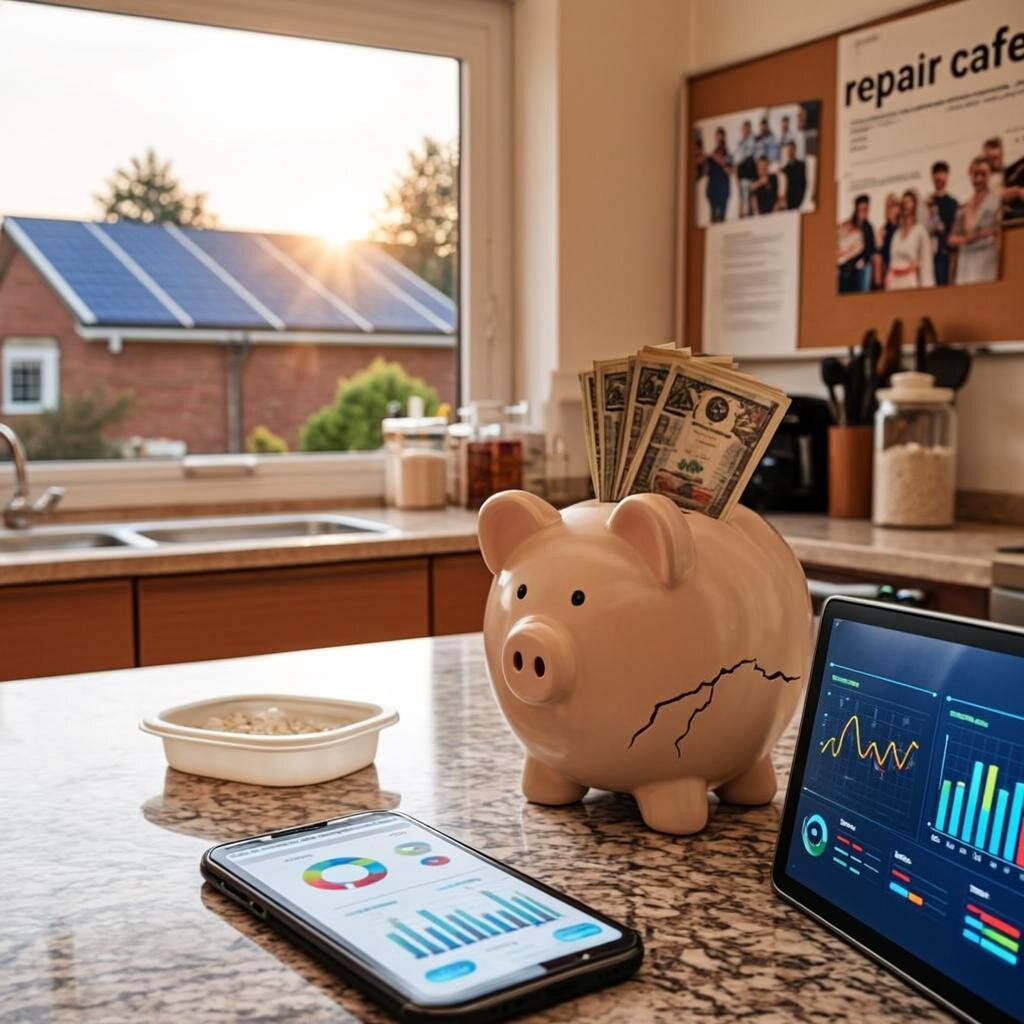
The Death of Traditional Budgeting
Remember when saving money meant stuffing cash into envelopes and hoping for the best? Those days are firmly behind us. As we navigate through 2026, the landscape of personal finance has undergone a seismic shift. The old advice of ‘skip your daily coffee’ and ‘pack your lunch’ feels almost quaint in a world where artificial intelligence can predict your spending patterns before you’ve even made them.
The biggest trend shaping how we save money isn’t a single app or strategy—it’s a fundamental reimagining of what saving means. We’re witnessing the convergence of behavioural science, predictive analytics, and a post-pandemic recalibration of values that has turned traditional financial wisdom on its head. The question is no longer just ‘how much can I cut?’ but ‘how can I optimise my entire financial ecosystem?’
AI: Your New Financial Co-Pilot
The most significant trend of 2026 is undoubtedly the mainstream adoption of AI-powered financial assistants. These aren’t your grandmother’s budgeting spreadsheets. Today’s AI tools analyse thousands of data points—from your spending habits to market trends—to identify savings opportunities you’d never spot yourself.
What makes this revolutionary is the shift from reactive to proactive saving. Instead of reviewing your spending at month-end and feeling guilty about that impulse purchase, AI now intercepts before the transaction completes. ‘Based on your goals and current spending velocity, this purchase would delay your holiday fund by three days. Proceed anyway?’ This gentle friction, backed by data, is changing consumer behaviour at scale.
The savings aren’t trivial either. Early adopters of AI financial co-pilots report saving an average of 15-23% more than those using traditional methods. The technology has democratised access to financial planning that was once the exclusive domain of the wealthy.
The Subscription Rebellion
We’ve reached peak subscription fatigue. The average UK household now manages 14 recurring payments, many forgotten or underutilised. But 2026 has birthed a counter-movement: the subscription rebellion.
This isn’t just about cancellation—it’s about strategic curation. New platforms have emerged that audit your digital life, identifying overlapping services and usage patterns. Why pay for three streaming services when you only watch two shows across all of them? The trend is towards ‘subscription stacking’ where households coordinate with friends and family to share legitimate family plans, reducing individual costs by up to 70%.
The rebellion has also sparked a return to ownership. After years of renting everything from music to movies to car access, consumers are calculating the lifetime cost of subscriptions versus one-time purchases. The maths often favours ownership, particularly for content you consume repeatedly.
Climate-Smart Saving
Perhaps the most encouraging trend is the convergence of financial and environmental consciousness. Saving money and saving the planet are no longer separate pursuits—they’re the same strategy wearing different hats.
Energy sovereignty is leading this charge. With residential solar battery storage costs dropping 40% since 2023, households are increasingly becoming their own power stations. The initial investment is recovered in 4-7 years, after which electricity becomes essentially free. Smart home systems now optimise energy usage automatically, running dishwashers and washing machines during off-peak hours or when solar generation is highest.
The circular economy is another climate-smart saving trend gaining momentum. Repair cafés, tool libraries, and clothing swap events have moved from fringe to mainstream. The financial logic is compelling: repairing a £400 washing machine for £60 rather than replacing it saves money and keeps waste from landfill. These community resources also build social connections—a benefit traditional saving advice never considered.
The Automation Imperative
Willpower is overrated. That’s the conclusion behavioural economists have been building towards, and 2026 is the year automation became non-negotiable for serious savers.
The trend has moved beyond simple direct debits into your savings account. We’re now seeing ‘dynamic automation’ where the amount saved adjusts based on your spending patterns, upcoming bills, and even your emotional state (yes, some apps can detect when you’re stressed and more likely to impulse buy, automatically transferring extra funds to savings as a circuit-breaker).
The psychology is fascinating. By removing the decision to save, we remove the opportunity to fail. Savers using automated systems report higher satisfaction and lower financial anxiety. The money disappears before you can spend it, but in a way that feels intelligent rather than restrictive.
Collaborative Consumption 2.0
The sharing economy has matured beyond Airbnb and Uber into something more intentional and community-focused. 2026’s collaborative consumption is about building genuine resource-sharing networks that benefit all participants.
Neighbourhood buying cooperatives are negotiating bulk discounts on everything from groceries to insurance. A street of twenty households can secure wholesale prices that individuals simply cannot access. These groups often use encrypted messaging apps to coordinate orders, splitting delivery costs and reducing packaging waste simultaneously.
Skill-sharing networks have also exploded. Instead of paying for a plumber, you might trade your expertise in social media marketing for someone’s plumbing skills. Time banks formalise these exchanges, creating community wealth that doesn’t require money to change hands. The savings can be substantial—trading services worth hundreds of pounds whilst building local relationships.
Predictive Analytics for Everyday Spending
The same predictive technology that powers your Netflix recommendations now optimises your grocery shopping. Price prediction algorithms track thousands of products across major retailers, alerting you when items hit historical lows.
This trend has spawned ‘strategic stockpiling’—buying non-perishables when prices bottom out rather than when you need them. The savings compound: a household that strategically stocks toilet paper, pasta, and cleaning supplies can save £200-300 annually whilst never running out of essentials.
The technology extends to bigger purchases too. Car-buying platforms now predict the optimal time to purchase based on dealership inventory cycles and market conditions. The same applies to furniture, electronics, and even home purchases. Timing, it turns out, is everything—and now we have the data to prove it.
The Cashless Paradox
As we approach a truly cashless society, an unexpected trend has emerged: the deliberate return to physical currency for specific spending categories. Behavioural scientists have discovered that the ‘pain of paying’—the psychological discomfort of parting with money—is significantly higher with cash than cards or contactless payments.
Savvy consumers are exploiting this by using cash for categories where they tend to overspend: nights out, impulse purchases, and entertainment. The physical act of counting out notes creates a moment of reflection that tapping a card simply doesn’t provide. Studies show people spend 20-40% less when using cash for discretionary categories.
This isn’t a rejection of digital finance—it’s a strategic deployment of analog tools where they work best. The hybrid approach, combining digital efficiency for bills and savings with cash for discretionary spending, represents the cutting edge of behavioural money management.
Future-Proofing Through Micro-Investing
The line between saving and investing has blurred beyond recognition. Micro-investing platforms now round up everyday purchases and invest the spare change into diversified portfolios. Buy a coffee for £2.80, and 20p gets invested automatically.
What’s changed in 2026 is the sophistication of these platforms. They now offer ‘goal-based investing’ where your risk profile automatically adjusts based on your timeline. Saving for a house deposit in two years? Conservative allocation. Building a retirement fund over thirty years? More aggressive growth strategy. The platforms also factor in your other savings and investments, providing a holistic view of your financial position.
The genius of micro-investing is its invisibility. You don’t feel the sacrifice, but over time, the compound growth becomes significant. A 25-year-old who invests just £1.50 daily in a diversified portfolio could accumulate over £50,000 by retirement age, assuming average market returns.
The Human Element in an Automated World
With all this technology, it’s tempting to think saving has become entirely mechanical. But the most successful savers in 2026 are those who combine technological tools with human accountability. Online communities, financial wellness groups, and even financial therapy have become integral components of successful saving strategies.
The trend towards financial transparency—sharing goals and progress with trusted friends or community members—dramatically increases success rates. We’re social creatures, and the desire to not let others down often outweighs our motivation to not let ourselves down.
Perhaps that’s the ultimate trend of 2026: the recognition that saving money, for all our technological advancement, remains a fundamentally human endeavour. The tools have changed beyond recognition, but the goal is the same—using our resources intentionally to build the lives we want. The smartest savers aren’t those with the best apps, but those who understand that technology serves human values, not the other way around.
![Como viver com menos do que você ganha [sem se sentir miserável]](https://productivepathblog.com/wp-content/uploads/2026/05/How-to-Live-Frugally-PTqOcG-559x1024.jpg)
