
From Side Gig to Side Identity
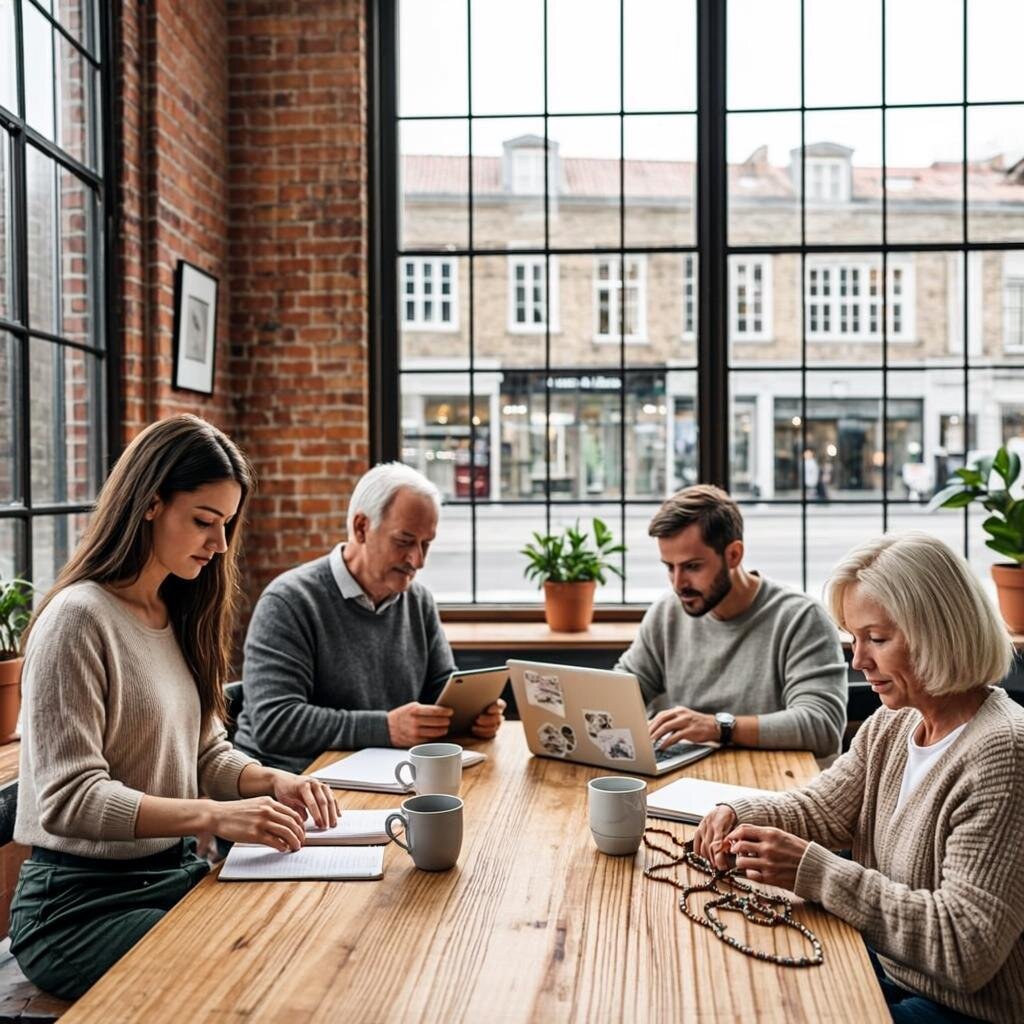
Walk into any café in Shoreditch, Manchester’s Northern Quarter, or Edinburgh’s Grassmarket in 2026, and you’ll overhear something peculiar. People aren’t just introducing themselves by their day jobs anymore. ‘I’m a data analyst, but I also run a bespoke terrarium business and host a podcast about forgotten Welsh folklore.’ This is the portfolio life—a phenomenon where side hustles have transcended their original purpose of generating extra income and become integral to how we construct our identities.
The numbers tell part of the story: according to recent data from the Office for National Statistics, nearly 47% of UK adults now engage in some form of supplementary income generation, up from 31% just three years ago. But the cultural shift runs far deeper than statistics. We’re witnessing the death of the single-identity career—the notion that you are one thing, professionally, for the bulk of your waking hours. In its place, a new cultural archetype has emerged: the portfolio person, someone who weaves together multiple income streams not merely for financial security, but as an act of self-definition.
The Democratisation of Entrepreneurial Identity
What makes 2026’s side hustle culture distinct from previous eras of moonlighting is its democratic nature. Historically, having ‘multiple interests’ was a luxury afforded to the leisured classes—the Renaissance men and women of aristocratic privilege. Today, platforms like Etsy, Substack, and a proliferation of AI-assisted tools have collapsed the barriers to entry. A nurse in Leeds can be a jewellery designer. A teacher in Bristol can be a digital product creator. A retiree in Cardiff can be a niche newsletter writer with subscribers across the globe.
This democratisation is reshaping our cultural relationship with entrepreneurship itself. The side hustle has destigmatised failure—because it’s not your everything, a venture that doesn’t work out isn’t catastrophic. This has created what cultural sociologists are calling ‘safe entrepreneurship’—a space where people can experiment with business ownership without betting their entire livelihood. The result is a more culturally confident population, willing to take creative risks that would have seemed reckless a decade ago.
The New Geography of Work and Play
The side hustle renaissance is physically reshaping our urban and rural landscapes. Co-working spaces have evolved into ‘co-hustling’ hubs—specialised environments where portfolio workers gather not just for desk space, but for community. In London alone, over 200 purpose-built side hustle studios have opened since 2024, offering everything from pottery wheels to podcast booths to 3D printing facilities on flexible memberships.
But perhaps more intriguingly, side hustles are breathing life into Britain’s declining high streets. As traditional retail closures continue, side hustle makers are taking over vacant shopfronts—sometimes as pop-ups, sometimes as permanent micro-businesses. The Federation of Small Businesses reports that 34% of new high street openings in 2025 were side hustle ventures transitioning to full-time operations. Towns like Margate, Hebden Bridge, and Stromness have become unlikely creative hubs, their affordability and charm attracting portfolio workers who can earn digital income whilst contributing to local economies.
Redefining Leisure: When Work Becomes Play
Perhaps the most profound cultural shift is how side hustles are blurring the boundary between work and leisure. The traditional model—work hard during the week, recover at the weekend—is being challenged by people who genuinely enjoy their side pursuits. When a graphic designer spends Saturday morning creating custom wedding stationery, or a software engineer spends evenings coding an indie game, are they working or playing?
This has forced a cultural reckoning with our relationship to productivity. Critics argue that the side hustle ethos has infected leisure with capitalist logic—turning every hobby into a potential monetisable asset. There’s validity to this concern. Yet others see something more nuanced emerging: a reintegration of making and being, where the artificial separation between ‘productive work’ and ‘frivolous play’ is dissolving. The side hustle, in this reading, represents a return to pre-industrial sensibilities, where craft, community, and commerce were intertwined rather than siloed.
The Intergenerational Side Hustle Economy
One of 2026’s most unexpected cultural developments is how side hustles are bridging generational divides. Gen Z’s digital nativity meets Boomer’s practical expertise in collaborative ventures that would have been unthinkable five years ago. A 19-year-old might handle the social media for a 65-year-old’s artisanal cheese business; a retired engineer might provide technical consultation for a young entrepreneur’s sustainable energy startup.
This cross-generational collaboration is quietly rebuilding social cohesion in an era of age-segregated communities. Side hustle networks—both online and in-person—have become rare spaces where different generations interact as equals, each bringing complementary strengths. Research from the University of Sheffield’s Cultural Economy unit suggests these relationships are improving intergenerational attitudes more effectively than any government initiative. When you’re building something together, age becomes irrelevant.
The Dark Side: When Portfolio Becomes Fragmentation
This cultural shift isn’t without its shadows. Mental health professionals report increasing cases of ‘identity fatigue’—exhaustion from maintaining multiple professional personas. The pressure to be not just good at one thing, but passable at several, is creating a new form of inadequacy. Social media amplifies this, with side hustle influencers curating impossibly diverse portfolios that leave ordinary people feeling insufficiently multifaceted.
There’s also the question of what gets lost when we’re always partially engaged in multiple pursuits. Depth requires sustained attention—the kind that’s difficult when your energy is distributed across four different income streams. Some cultural commentators worry we’re creating a generation of competent generalists at the expense of exceptional specialists. The side hustle culture, for all its democratising benefits, may be subtly devaluing the deep expertise that drives genuine innovation.
Looking Forward: The Portfolio Life as Cultural Default
As we move through 2026, the side hustle shows no sign of retreating to the margins. If anything, it’s becoming the default mode of professional life for anyone under 45—and increasingly for those above it. The implications extend far beyond individual income statements. We’re watching the emergence of a new cultural paradigm where identity is fluid rather than fixed, where career paths are portfolios rather than ladders, and where the question ‘What do you do?’ has become genuinely unanswerable in a single sentence.
This is neither utopia nor dystopia—it’s transformation. The side hustle renaissance is reshaping how we think about work, worth, community, and selfhood. For better or worse, the portfolio life is becoming the cultural norm. The question now isn’t whether you’ll have a side hustle, but which ones—and what they’ll say about who you are becoming.
![Como viver com menos do que você ganha [sem se sentir miserável]](https://productivepathblog.com/wp-content/uploads/2026/05/How-to-Live-Frugally-PTqOcG-559x1024.jpg)
