
Beyond Penny-Pinching: The Era of Financial Minimalism
In the hyper-connected landscape of 2026, the traditional advice to ‘skip your daily latte’ feels distinctly antiquated. We no longer live in a world of physical ledgers and cash envelopes; we inhabit a digital ecosystem where our finances are inextricably linked to our digital workflows. Saving money today isn’t about deprivation—it’s about system optimisation. Think of your personal finances as a Life Operating System (LifeOS). Just as a tech company routinely audits its software stack to eliminate bloated code and reduce server costs, the modern professional must audit their lifestyle stack to eliminate financial friction.
When we reframe ’10 Smart Ways To Save Money Every Month’ not as a list of chores, but as a protocol for upgrading your LifeOS, the psychology shifts. You are no longer a penny-pincher; you are a lifestyle hacker. By integrating financial efficiency into your daily digital routine, saving becomes a passive, automated byproduct of a well-organised modern life, freeing up both your cognitive bandwidth and your capital for the things that truly matter.
Auditing Your Lifestyle Stack and Automating Advocacy
The modern workflow is subscription-heavy. We subscribe to SaaS products for work, streaming services for leisure, and app-based services for convenience. The first smart move in a modern workflow is conducting a ruthless ‘Lifestyle Stack Audit’. Just as you would cancel unused software licences at work, you must audit your personal digital subscriptions. Use a dedicated virtual card for all subscriptions, making it incredibly easy to track and turn off the tap on services you no longer engage with.
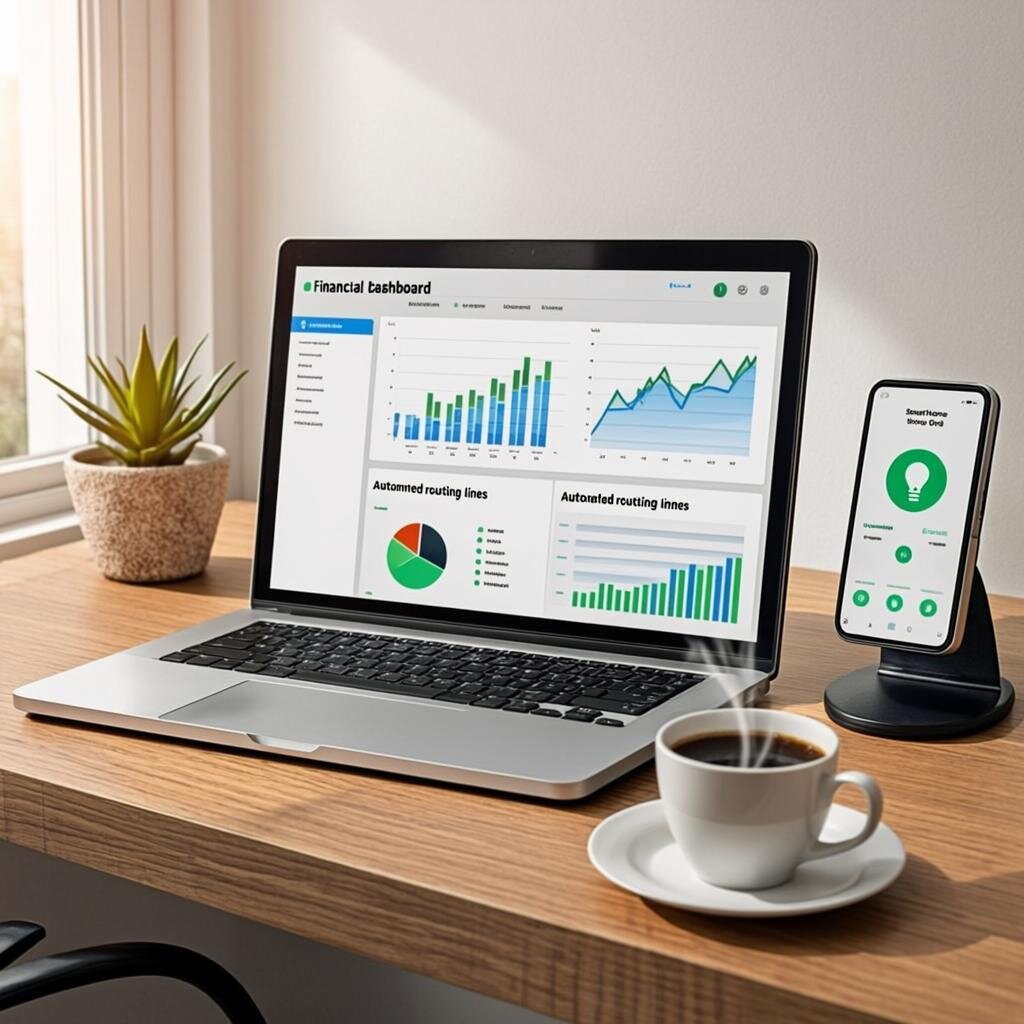
Furthermore, modern workflow optimisation means delegating tedious tasks to machines. Enter automated bill negotiation. Today, there are AI-driven apps that will actively negotiate your broadband, mobile, and insurance bills on your behalf, taking a percentage of the savings as a fee. By integrating these tools into your financial workflow, you ensure you are always on the best tariff without spending your evenings on hold. It is the ultimate modern luxury: saving money whilst entirely outsourcing the effort.
Data-Driven Consumption and IoT Energy Arbitrage
Food and energy are two of the biggest variable costs in any household, but the modern smart home turns these variables into optimisable data points. Instead of clipping physical coupons, the modern saver uses algorithmic grocery lists. By syncing your meal-planning app with your supermarket’s API, you can automatically generate shopping lists based on what is on sale this week, seamlessly integrating budget eating into your digital calendar.
Simultaneously, the Internet of Things (IoT) has revolutionised home energy management. Smart thermostats and smart plugs don’t just offer convenience; they engage in ‘energy arbitrage’. They learn your daily workflow—when you leave for the office, when you return, when you sleep—and automatically adjust the climate or turn off standby devices. By allowing your home’s operating system to manage your energy consumption based on your actual routine, you save hundreds of pounds a year without ever having to manually flick a switch.
Inserting Friction into the E-Commerce Workflow
Modern e-commerce is engineered for frictionless purchasing. One-click buying, biometric payments, and algorithmic recommendations are designed to part you from your money before your brain has time to register the transaction. To save money in this environment, you must deliberately design friction back into your purchasing workflow. This is where the ’48-Hour Cart Rule’ comes into play.
By setting a personal rule that nothing non-essential is purchased at checkout, you force yourself to leave items in your digital basket for two days. You can even use browser extensions that block one-click purchasing. This deliberate pause acts as a cooling-off period, allowing the initial dopamine hit of online shopping to fade. More often than not, when you return to your cart 48 hours later, the urgency has vanished. You will find yourself clearing the cart rather than emptying your bank account, seamlessly integrating mindful spending into your digital browsing habits.
Lean Inventory and the Circular Economy Workflow
Finally, the modern workflow embraces the concept of ‘Lean Inventory’ and the circular economy. In the past, buying in bulk was the hallmark of a savvy saver. Today, carrying too much physical stuff is viewed as a liability that clutters both your physical space and your mental clarity. The ‘One-In, One-Out’ rule is a vital workflow protocol: for every new item brought into your home, an old one must be sold, donated, or recycled. This not only keeps your living space minimalist but also generates a secondary income stream through resale platforms.
Beyond your physical inventory, the modern saver optimises their transport and community workflows. Rather than sinking money into car ownership, insurance, and depreciation, many modern professionals rely on Mobility-as-a-Service (MaaS)—subscribing to car clubs or using e-scooters only when necessary. Furthermore, integrating skill-swapping into your social workflow—trading your web design skills for a neighbour’s plumbing expertise via local digital time-banks—keeps money entirely out of the equation. By treating your life as an agile, optimised workflow, saving money transforms from a restrictive budget exercise into a dynamic, empowering lifestyle choice.
![Como viver com menos do que você ganha [sem se sentir miserável]](https://productivepathblog.com/wp-content/uploads/2026/05/How-to-Live-Frugally-PTqOcG-559x1024.jpg)
