
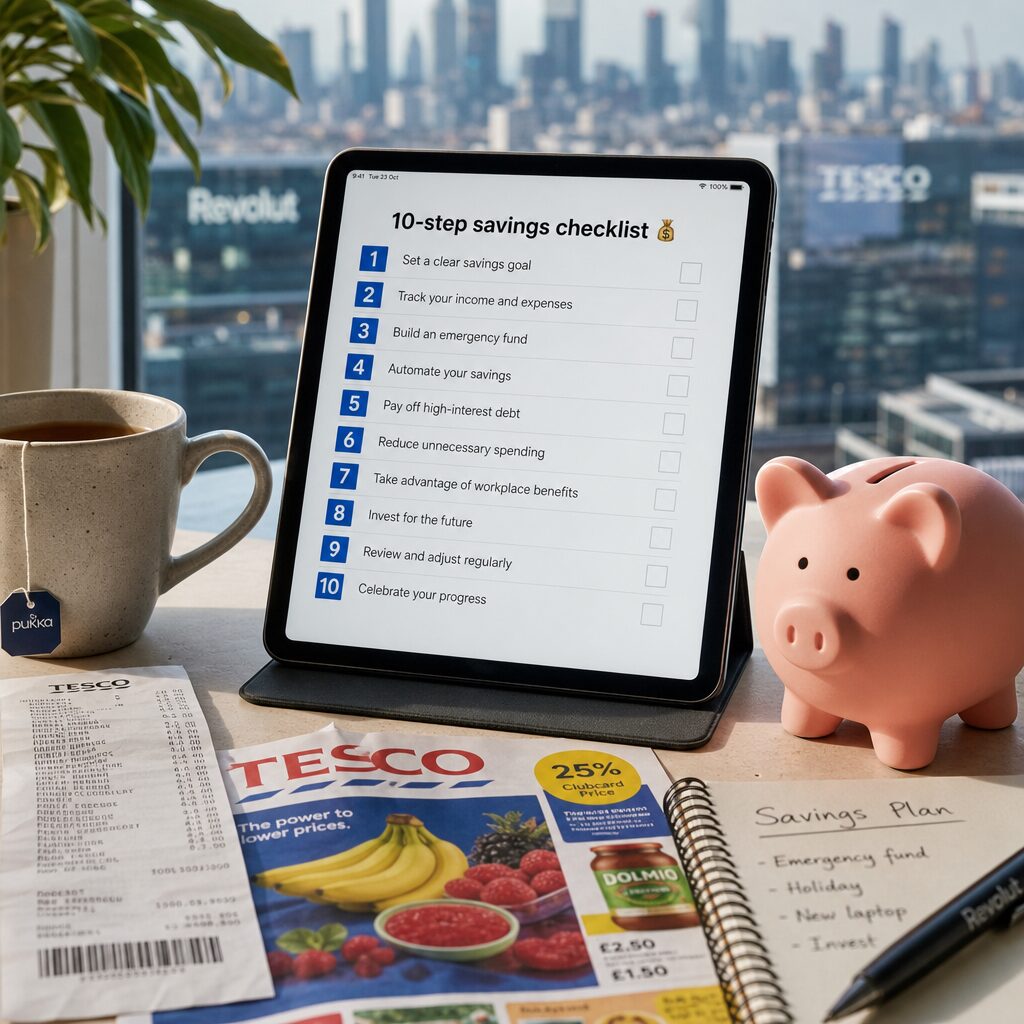
A small list that became an industry
What began as a pragmatic blog post—”10 Smart Ways To Save Money Every Month”—has, in barely a decade, become a blueprint for entire commercial and civic ecosystems. Far from remaining a harmless productivity list, the ten-item format has been productised: turned into subscription micro‑services, embedded curricula, UX patterns and regulatory heuristics. This section unpacks how a simple, repeatable content unit evolved into an organising principle that shapes product roadmaps, marketing funnels and public policy.
The list’s appeal is structural. Ten is short enough to be digestible but long enough to promise real change. Companies and institutions seized on that symmetry. Fintechs package ten-step onboarding journeys; employers gift ten-week savings challenges; neighbourhoods run ten-point energy drives. The once-modest advice list now frames how audiences expect to be taught, nudged and measured.
From tips to APIs: modularising personal finance
Engineers and product managers converted each of the ten suggestions into discrete, interoperable modules. ‘Round-up spare change’ became a microtransaction API; ‘automate bills’ was recast as a recurring-payments SDK; ‘meal planning’ spawned grocery-list data services. These modules plug into banking apps, accounting software and even smart fridges.
This modular approach is transforming the industry by lowering the barrier to ship financial coaching features. Start-ups can now embed proven saving behaviours with a few API calls rather than build entire behavioural engines. The result: rapid proliferation of evidence-based saving tools across unexpected verticals, from dating apps that recommend affordable dates to travel platforms that round up travel funds.
Behavioural design scaled and commodified
Behavioural economists long studied nudges. The ten‑point list popularised particular nudges—automaticity, social proof, immediate feedback—and those patterns are now standardised into design libraries. Agencies sell ’10-step’ UX templates optimised for habit formation, converting sound psychological techniques into repeatable commercial assets.
This commodification accelerates adoption but raises a deeper question: whose interests do these nudges primarily serve? In many cases, the same techniques that help consumers save are repurposed to steer spending or increase retention. The industry is negotiating a new contract between influence and integrity—one that will define trust in fintech for years to come.
Retail reinvents itself around micro-savings
Retailers and supermarket chains use the ten-item logic to reframe promotions. Instead of broad discount seasons, they now design ‘ten-week savings journeys’ tied to loyalty programmes. Customers receive progressive incentives—small rebates, recipe kits, and automatic couponing—that mirror the month-by-month saving ethos.
This shift changes inventory, marketing cadence and store experience. Retail floors are rearranged into coaching spaces with QR-enabled tips beside staples. The result is a retail strategy that blends education with commerce: saving becomes a pathway to brand loyalty rather than merely a marketing gimmick.
Media, creators and the creator‑economy pivot
Content creators repurposed ’10 smart ways’ into serialized formats: ten‑episode podcasts, ten-chapter newsletters, ten-day challenges. Platforms reward this predictability with algorithmic preference, so creators earn attention by offering structured, measurable advice. Sponsorships follow the format—brands pay to be the ‘proven step’ in a creator’s list.
This has professionalised personal finance content, but also splintered audiences into micro‑communities centred on specific ten‑step doctrines. The industrialisation of advice creates careers for curators and a marketplace for derivative products—workbooks, planners, bespoke coaching—shifting how ordinary readers access financial guidance.
Municipal and employer adoption: scaling public good
Local governments and employers adopted ten-step frameworks as policy tools. Councils run ‘ten ways to lower your household bills’ campaigns; employers integrate ‘ten smart ways to save’ into employee benefits and financial wellbeing programmes. The format’s clarity helps operationalise interventions and measure outcomes across populations.
This institutional uptake is reshaping public services. Rather than one-off subsidies, authorities experiment with structural nudges—timed reminders for bill switching, facilitated access to affordable credit, or payroll-based micro‑savings. The result is a shift from charity to capacity-building, with measurable reductions in short‑term financial stress for many households.
Datafication, ethics and privacy trade-offs
Turning ten pragmatic tips into products requires data—spending patterns, calendar events, location, even grocery lists. The industry’s growth has therefore accelerated datafication of everyday life. While richer datasets improve personalisation and save more effectively, they also amplify privacy risk and surveillance potential.
Firms now face an ethical crossroads: pursue hyper-personalisation or adopt privacy-preserving designs. A new market segment is emerging for ‘trusted saving platforms’ that employ local processing, differential privacy and transparent data governance—the ones that will earn long-term consumer confidence.
Unintended consequences and equity blind spots
The standardised ten-step approach is efficient, but it isn’t universally applicable. People in precarious employment, with caregiving burdens or living in high-cost regions may find the steps impractical or punitive. Industry players who neglected contextualisation risk widening inequality by rewarding those already positioned to benefit.
Consequently, innovators are creating adaptive ten‑step frameworks that triage users into pathways reflective of their circumstances. These hybrid models—part algorithm, part human coach—are starting to restore nuance to what was once a one-size-fits-all narrative.
Design ethics: who writes the ten steps?
As the format gains institutional influence, the question of authorship becomes urgent. Who decides which ten steps are authoritative? Standards bodies, academic consortia and civil-society coalitions are stepping in to certify evidence-backed lists and audit commercial products for fairness and efficacy.
This governance layer is subtle but transformative: certified lists become the new currency of trust. Companies that align with these standards gain distribution advantages, while unscrutinised approaches face reputational and regulatory risk.
What this means for the next decade
The metamorphosis of a simple list into an industry playbook reveals a larger dynamic: small, repeatable ideas can be scaled into systemic change. Expect further convergence—banking rails, retail operations, health and housing programmes will increasingly borrow ten‑step templates to drive measurable outcomes.
For practitioners and citizens alike, the lesson is to treat formats as infrastructure. The ten-point list is now a lever; whether it bends systems towards inclusion, exploitation or something in between will depend on who builds the tools and the guardrails they deploy.
Practical takeaways
For consumers: look for products that contextualise the ten steps to your circumstances and prioritise privacy.
For designers and entrepreneurs: modularise solutions but embed equitable triage and transparent governance from the outset.
For policymakers: use the format’s clarity to craft measurable interventions, but invest in standards and audits that protect vulnerable groups.
These concise actions determine whether the ten-step phenomenon becomes a democratic tool for prosperity or another extractive playbook.
![Como viver com menos do que você ganha [sem se sentir miserável]](https://productivepathblog.com/wp-content/uploads/2026/05/How-to-Live-Frugally-PTqOcG-559x1024.jpg)
