
Why 2026 Feels Different: Side Hustles Move From Fringe to Strategic Tool
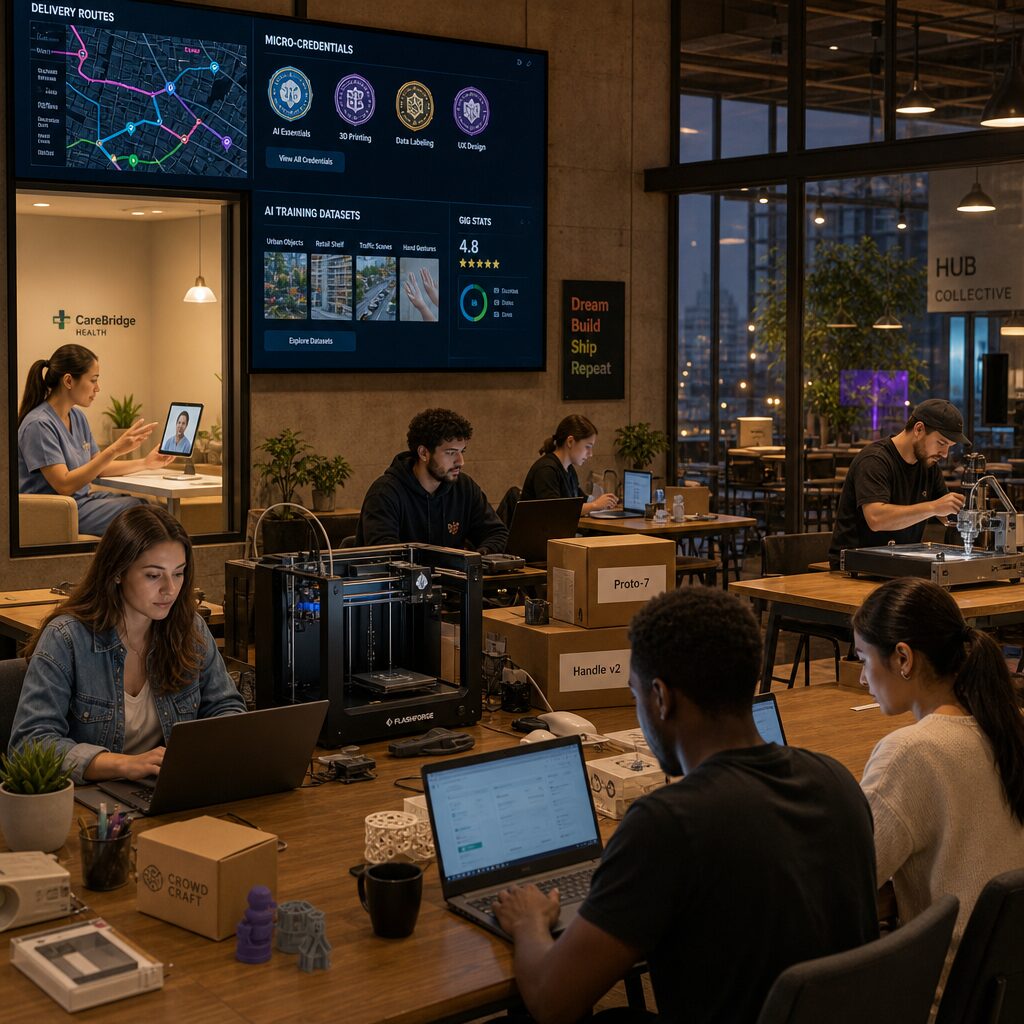
By mid‑2026, side hustles no longer sit at the margins of the economy. Businesses across sectors are actively rethinking these individual income streams as modular capabilities they can harness — not merely as supply of cheap labour but as a flexible, distributed set of services, R&D nodes and community-facing touchpoints. What used to be a person selling crafts on weekends or offering a ride in the evening is now viewed by firms as an on‑demand behavioural lab, a marketing channel, a data source and a talent pipeline.
This shift is driven by several trends converging at once: the mainstreaming of microplatforms, richer APIs that let companies integrate independent workers into workflows, and a regulatory landscape that clarifies gig work status in major markets. The result is surprising: industries are repurposing classic side hustles to solve problems that have nothing to do with individuals’ supplementary income — from live product feedback loops to affordable community care and rapid prototyping.
Retail & E‑commerce: Micro‑Testers, Pop‑Up Sellers and Last‑Mile R&D
Retailers are turning weekend makers and resellers into live product laboratories. Small‑scale sellers on platforms like Etsy or direct‑to‑consumer microbrands are invited into larger ecosystems as prototypes: retailers offer them short leases in physical pop‑ups, bundled marketing, or access to logistics in exchange for real‑time data about customer behaviour.
Aside from product scouting, gig couriers and independent drivers are increasingly used for hyperlocal delivery testing and last‑mile experiments. Instead of building expensive urban fulfilment centres, chains hire ad‑hoc couriers for evening deliveries or trial new fulfilment windows. The data captured—delivery times, return rates, customer notes—feeds immediate optimisation cycles.
For side hustlers this opens new revenue pathways: paid pilot programmes, revenue shares on wholesale deals, or short consultancy roles to translate micro‑customer insights into product tweaks.
Healthcare & Wellbeing: Tele‑Side Hustles as Community Healthcare Extensions
In healthcare, regulated professionals and trained laypeople running side hustles (teletherapy, health coaching, nutrition consulting) are being embedded into broader care pathways. Clinics and insurers contract these practitioners to provide between‑visit touchpoints: adherence nudges, nutrition counselling, or mental health check‑ins that reduce readmissions and improve outcomes.
This repurposing is not a cost cutting measure alone; it’s a scale strategy. By integrating vetted freelance coaches and therapists through secure platforms, health systems extend reach into communities that otherwise face access barriers. Platforms now offer compliance toolkits, secure messaging and billing bridges so clinicians can maintain standards while working flexibly.
For freelancers, the opportunity includes steady contracted hours, clinical oversight roles, and accredited CPD pathways that turn a part‑time hustle into recognised clinical experience.
Finance & Fintech: Side Hustles as Trust Engines and Credit Signals
Fintechs are mining side‑hustle activity to create richer credit and income profiles for people outside traditional payroll systems. Rather than relying solely on bank statements, lenders analyse marketplace sales histories, gig earnings and platform reputation scores as alternative credit indicators.
Beyond underwriting, financial services increasingly offer side‑hustlers tailored products: instant revenue advances for active sellers, micro‑investing products that round up side‑income, and hybrid tax management services that automate freelance obligations. Some neobanks collaborate directly with platforms, providing integrated business accounts for sellers and real‑time insights that help both platform and user manage cash flow.
This approach turns a patchwork income into an enterprise asset: predictable revenue streams gain access to credit, insurance and retirement products previously unavailable to non‑traditional workers.
Education & Edtech: From Tutoring Gigs to Micro‑Credential Ecosystems
The tutoring side hustle has been around for decades, but in 2026 education companies are reframing it as a modular micro‑credential ecosystem. Independent tutors, micro‑course creators and workshop leaders plug into platforms that issue verifiable micro‑credentials and badges employers recognise. Universities and employers partner with these platforms to test new curricula at low cost before committing to full programmes.
Edtech firms also use tutors and freelancers as content R&D teams: they pilot lesson formats, test cultural localisation, and crowdsource translations from active educators abroad. The result is faster course iteration and a marketplace where teaching side‑hustlers can monetise niche expertise while building formal reputation markers.
For learners, this creates clearer pathways: bite‑sized learning delivered by motivated practitioners, validated by microcredentials that signal competency to employers.
Manufacturing, Logistics & The Maker Economy: Distributed Production and On‑Demand Expertise
Manufacturers are tapping into the maker community — weekend fabricators, 3D‑printing enthusiasts and small workshop operators — to decentralise prototyping and low‑volume production. Rather than centralising every build, firms coordinate networks of qualified hobbyists for rapid iteration runs, custom orders and regionalised product variants.
Logistics firms similarly incorporate independent drivers and local fulfilment hubs run by side‑hustlers to smooth seasonal spikes and reduce transit times. Small producers gain access to fulfilment tools and shipping discounts, while logistics players benefit from a distributed last‑mile footprint without heavy fixed costs.
This mutually beneficial arrangement reframes side hustles as complementary micro‑enterprises, blurring the line between hobbyist and supplier.
Tech, AI & Creative Industries: Microtasking, Synthetic Media and Co‑creation
Tech companies have formalised the role of microtaskers — data label‑ers, voice‑over artists, prompt engineers — as part of the core product pipeline. Crowdworkers with side gigs now contribute to model training, dataset curation and safety testing, often through platforms that certify contributors and pay for quality rather than speed.
Creative industries repurpose gig freelancers for short‑form commissioned content, iterative ad testing and rapid concept visualisation. Rather than hiring large agencies, brands work with networks of creators who operate as side‑hustle studios to produce culturally specific campaigns at scale.
As synthetic media becomes mainstream, companies create hybrid workflows where human side‑hustlers validate, localise and humanise AI outputs, ensuring authenticity and compliance while scaling content production.
Implications for Workers and Businesses — New Rules of Engagement
This industrial repurposing of side hustles has practical consequences. Workers benefit from diversified income but also face increased professionalisation demands: credentialing, compliance and digital portfolio management become important. Businesses gain agility and cost‑effective innovation channels, but must invest in onboarding, quality assurance and fair compensation models to avoid reputational harm.
Policy and platform design will shape how these relationships evolve. Emerging best practice includes transparent contracting, clear IP arrangements, data rights for contributors, and pathways for side‑hustlers to convert into formal roles. Those who navigate this landscape thoughtfully win talent, trust and local insight — a competitive edge in 2026.
How to Spot Opportunities and Get Involved
If you’re a side‑hustler, seek platforms that offer enterprise partnerships, credentials or steady pilot programmes rather than purely transactional gigs. Look for marketplaces that provide compliance toolkits, performance metrics and pathways to scale.
If you’re a business, start small: run a pilot integrating independent contributors into a non‑critical workflow, measure outcomes, and refine onboarding processes. Focus on fair pay, clear expectations and feedback loops; these build trust and convert episodic participants into long‑term collaborators.
For more reading on platform evolution and regulatory frameworks, explore resources from industry groups and regulators, or visit analyses on platforms such as Financial Times and specialist labour market research sites.
Conclusion: Reimagining Side Hustles as Industrial Capabilities
The surprising story of 2026 is not that side hustles are bigger — it’s that industries are inventing new uses for them. From healthcare touchpoints to distributed manufacturing, companies are treating independent workers as strategic levers for innovation, reach and resilience. For workers, that offers new earning and professional pathways; for businesses, an opportunity to move fast while staying connected to real communities. The winners will be those who design ethical, scalable systems that value both flexibility and dignity.
![Como viver com menos do que você ganha [sem se sentir miserável]](https://productivepathblog.com/wp-content/uploads/2026/05/How-to-Live-Frugally-PTqOcG-559x1024.jpg)
