Uncategorized

A split-screen photograph showing a corporate boardroom on the left side with executives in smart business attire examining charts on a large screen, and on the right side, a cosy home workspace at dusk where a professional in a casual jumper works on a laptop surrounded by product prototypes, 3D-printed objects, and notebooks. A subtle connecting line of golden light runs between the two scenes, suggesting the flow of ideas and resources. The overall tone is warm and aspirational, with soft natural lighting and a shallow depth of field that keeps focus on the human elements rather than the technology.

When Employers Started Funding Your Side Hustle: How British Industry Co-Opted the Gig Economy in 2026

The Corporate Embrace: When Side Hustles Became Strategy In 2026, something curious has happened in boardrooms across the United Kingdom. The side hustle—once viewed with suspicion by employers worried about distracted staff—has become an unexpected tool for corporate innovation. Companies are no longer asking employees to abandon their evening ventures; they’re actively encouraging them, and […]


When Employers Started Funding Your Side Hustle: How British Industry Co-Opted the Gig Economy in 2026 Read More »

A split-screen visual showing two contrasting scenes. On the left, a young couple sits at a kitchen table covered in cash budgeting envelopes, a jar of coins, and a handwritten savings chart pinned to the wall behind them—representing traditional but mortgage-problematic saving methods. On the right, the same couple sits at a modern desk with a laptop displaying a clean bank statement interface, a Lifetime ISA dashboard showing steady monthly deposits, and a printed credit report with a healthy score. Between the two images, a subtle red line runs horizontally, suggesting a dividing line between approaches. The lighting is warm and realistic, with the left side slightly dimmer to suggest the older, less effective approach. The overall tone is aspirational but grounded, conveying the seriousness of mortgage preparation without being gloomy.

The First-Time Buyer’s Savings Trap: Why Following ’10 Smart Ways to Save Money’ Could Cost You Your Mortgage

The Savings Paradox: When Frugality Becomes Your Enemy If you’re a first-time buyer in 2026, you’ve probably devoured every article promising ’10 smart ways to save money every month’ with the desperation of someone who’s just seen the average UK house price. You’ve cut subscriptions, switched to own-brand beans, and started walking to work. Your

The First-Time Buyer’s Savings Trap: Why Following ’10 Smart Ways to Save Money’ Could Cost You Your Mortgage Read More »

A dimly lit modern flat at dusk, where a person sits at a minimalist desk illuminated by the warm glow of a laptop screen. On the desk, a half-finished mug of coffee, scattered sticky notes with ambitious scribbles, and a small succulent. Through the window behind them, a city skyline blurs into twilight — symbolising the boundary between the day job they've left behind and the identity they're building after hours. The scene captures quiet determination mixed with subtle isolation.

Why We Really Side Hustle: The Hidden Psychology Behind 2026’s Extra-Income Revolution

The Money Is a Red Herring Ask anyone why they’ve taken up a side hustle in 2026, and they’ll give you a perfectly rational answer: inflation, housing costs, the creeping anxiety of financial precarity. These explanations are not wrong — but they are incomplete. The truth, as behavioural economists and psychologists are beginning to recognise,

Why We Really Side Hustle: The Hidden Psychology Behind 2026’s Extra-Income Revolution Read More »

A modern, brightly lit consumer marketplace stall displays an array of glossy product boxes, each labelled with different money-saving strategy titles like 'Meal Prep Mastery' and 'Bill Negotiation Pro'. A discerning shopper in smart casual attire holds a clipboard and magnifying glass, examining the fine print on one box whilst other boxes sit arranged on shelves behind them with price tags showing time costs rather than monetary prices. The scene has a clean, almost clinical aesthetic with soft natural lighting streaming through large windows, suggesting a thoughtful, analytical approach to personal finance rather than impulse buying.

The Strategy Shopper’s Dilemma: A Buyer’s Guide to Evaluating Money-Saving Methods in 2026

Welcome to the Money-Saving Marketplace It is August 2026, and the personal finance landscape has never been more crowded. Every week, a new crop of money-saving strategies, apps, and frameworks promises to revolutionise your monthly budget. The phrase ’10 Smart Ways To Save Money Every Month’ has become less of a helpful listicle and more

The Strategy Shopper’s Dilemma: A Buyer’s Guide to Evaluating Money-Saving Methods in 2026 Read More »

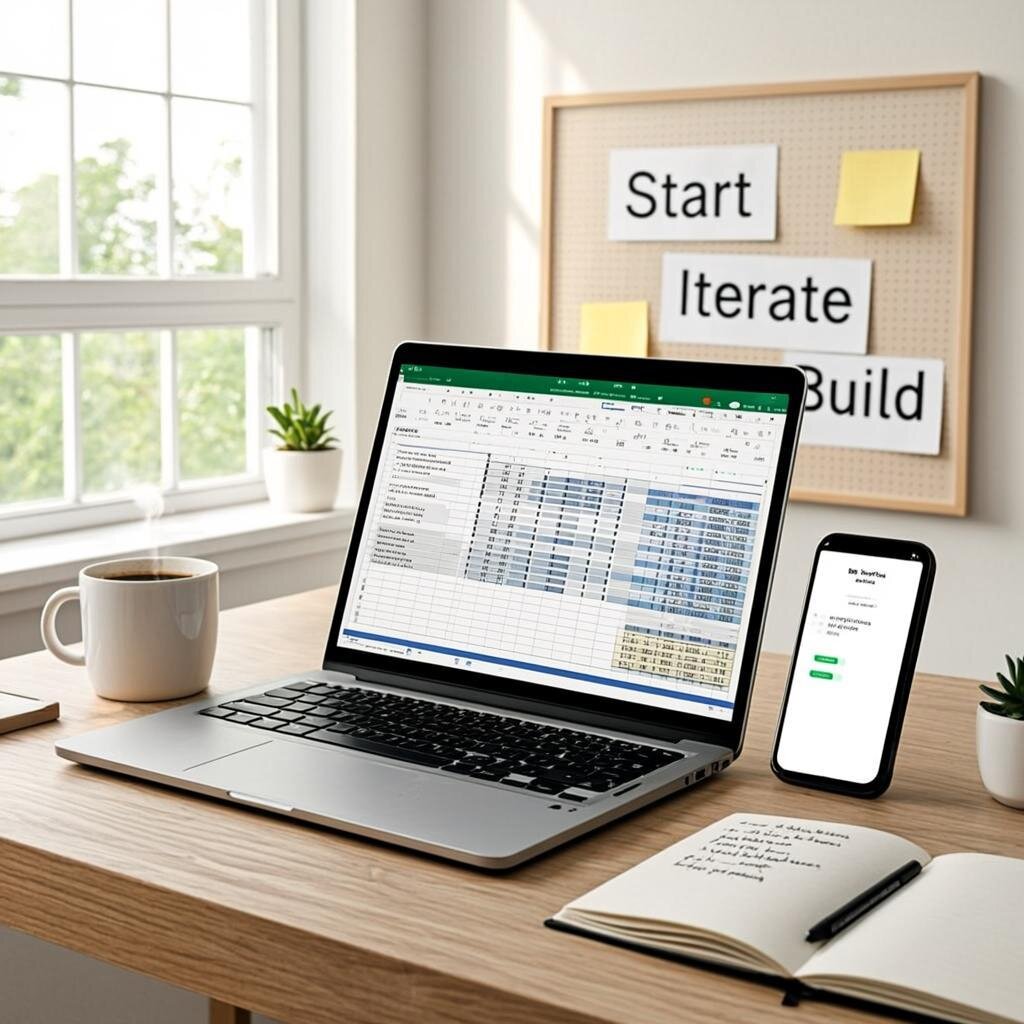
A bright, modern home office scene bathed in natural morning light from a nearby window. On a clean wooden desk sits an open laptop displaying a simple spreadsheet with growing income numbers, alongside a smartphone showing a notification of a first sale. A steaming cup of coffee rests next to a small notebook with handwritten goals and a pen. The wall behind features a subtle vision board with sticky notes showing motivational words like 'Start', 'Iterate', and 'Build'. The overall mood is one of calm optimism and productive possibility—capturing that quiet moment when a beginner takes their first concrete steps toward financial independence.

The Side Hustle Renaissance: A Beginner’s Blueprint to Extra Income in 2026

Why 2026 Isn’t Just Another Year for Side Hustles If you’ve been telling yourself that 2026 is the year you’ll finally start earning extra income, you’re not alone—and more importantly, you’re not too late. But here’s what nobody is telling you: the side hustle landscape has fundamentally shifted. We’re no longer in the era of

The Side Hustle Renaissance: A Beginner’s Blueprint to Extra Income in 2026 Read More »

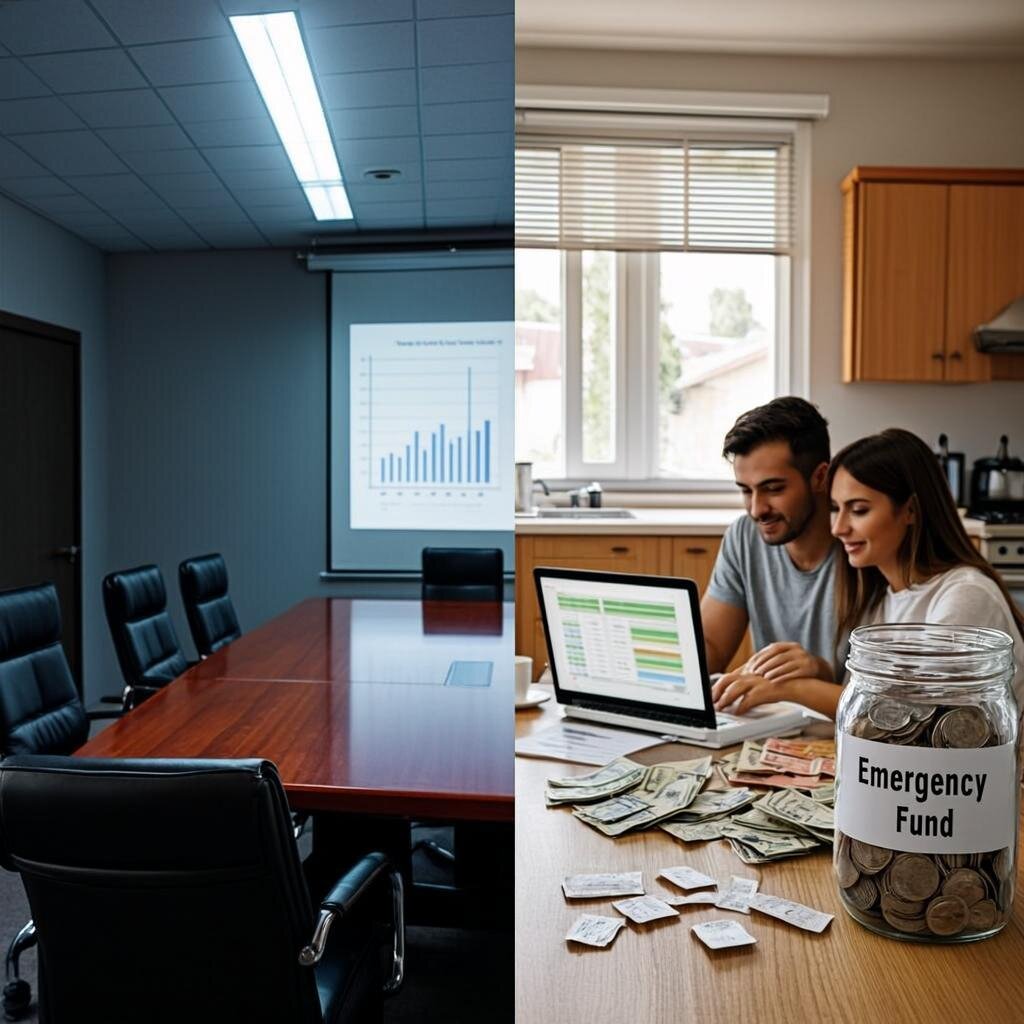
A split-screen conceptual image. On the left side, a traditional bank boardroom in muted greys, empty leather chairs around a long mahogany table, a projected chart showing declining fee revenue. On the right side, a warm, brightly lit kitchen where a diverse young couple sits at a wooden table with a laptop open to a budgeting spreadsheet, supermarket receipts fanned out beside them, a jar labelled 'Emergency Fund' with visible coins and notes, and a meal-planning whiteboard on the wall behind them. The contrast between institutional decline and empowered domestic financial management is stark and intentional. Natural light streams through the kitchen window whilst the boardroom is lit by cold fluorescent panels.

The Frugality Doctrine: How Ten Saving Strategies Quietly Dismantled an Industry

The Quiet Insurrection in Personal Finance For decades, the personal finance industry operated on a curious contradiction: it profited from people’s inability to manage money. Financial advisors, debt consolidation firms, and even banks relied — whether consciously or not — on a populace that struggled to save. Then something shifted. The proliferation of accessible, actionable

The Frugality Doctrine: How Ten Saving Strategies Quietly Dismantled an Industry Read More »

A split-screen visualisation showing a typical British high street on the left, with commuters walking past closed shop fronts, contrasted against a vibrant right side displaying floating holographic data visualisations—revenue charts, platform logos, and interconnected network lines glowing in blue and amber. In the centre, a diverse group of people in casual attire work on laptops at a café table, surrounded by subtle icons representing various side hustles: a camera, a delivery bike, a paintbrush, code brackets, and a small package. The lighting transitions from the muted grey of traditional commerce on the left to the warm, energetic glow of digital entrepreneurship on the right, capturing the economic transformation described in the article.

The Side Hustle Shockwave: How 2026’s Micro-Entrepreneurs Are Quietly Rewriting Market Economics

The Invisible Economy Made Visible Walk through any high street in Britain on a Saturday afternoon, and you’re witnessing an economic transformation hiding in plain sight. The barista crafting your flat white might also be running a £40,000-a-year vintage clothing empire on Depop. The accountant in the corner booth could be generating AI-powered stock photography

The Side Hustle Shockwave: How 2026’s Micro-Entrepreneurs Are Quietly Rewriting Market Economics Read More »

A solitary figure stands at a crossroads in a misty urban landscape at dawn, their silhouette framed against a sky transitioning from deep indigo to soft amber. To their left, a towering wall of neon advertisements and digital screens pulses with consumer messaging, casting harsh artificial light. To their right, a simpler path leads towards a horizon where a small but sturdy stone house sits atop a hill, its windows glowing warmly. The figure holds a single coin in their outstretched palm, catching the first rays of natural sunlight. The contrast between the chaotic, overwhelming commercial imagery on one side and the quiet, grounded solidity of the saved-for home on the other creates a powerful visual metaphor for the choice between consumption and financial autonomy. Rain-slicked cobblestones reflect both the neon glare and the golden sunrise, suggesting the duality of our modern economic existence.

The Quiet Rebellion: Why Saving Money Is the Ultimate Act of Self-Determination in 2026

The Attention Economy’s Hidden Tax We are living through an era where our financial decisions are no longer entirely our own. Every scroll, every pause, every moment of digital hesitation is tracked, analysed, and monetised by sophisticated algorithms designed to part us from our money with surgical precision. In this landscape, the traditional advice to

The Quiet Rebellion: Why Saving Money Is the Ultimate Act of Self-Determination in 2026 Read More »

A modern, bright office space where a diverse group of professionals in smart-casual attire are gathered around a large wooden table, engaged in animated discussion. On the table are laptops, sticky notes with customer journey maps, and coffee cups. One person is gesturing enthusiastically whilst pointing at a whiteboard covered with diagrams showing customer feedback loops and side hustle project ideas. In the background, large windows reveal a cityscape, and a banner on the wall reads 'Customer Experience Lab'. The atmosphere conveys creative energy and entrepreneurial spirit within a corporate setting, with plants and contemporary artwork adding warmth to the space.

The Corporate Side Hustle: How Businesses Are Borrowing from Gig Culture to Revolutionise Customer Experience in 2026

The Unexpected Marriage of Side Hustles and Customer Experience When we think of side hustles, we typically picture individuals supplementing their income through freelance work, online selling, or gig economy apps. However, a fascinating trend has emerged in 2026 that’s turning this assumption on its head. Forward-thinking businesses have begun strategically incorporating side hustle models

The Corporate Side Hustle: How Businesses Are Borrowing from Gig Culture to Revolutionise Customer Experience in 2026 Read More »

A meticulously organised engineer's workbench photographed from above, where financial tools replace mechanical ones. A drafting compass draws perfect circles on graph paper showing budget allocations, whilst a vintage micrometer measures a stack of gold coins. Brass gears interlock beside a leather-bound ledger opened to a page of neat columns. A cup of tea sits in the corner, steam rising, next to a slide rule and a fountain pen. The lighting is warm and directional, casting long shadows that emphasise the precision and craftsmanship of the scene. The overall aesthetic blends Victorian engineering workshop warmth with modern financial planning, rendered in rich amber and deep brown tones.

The Architecture of Thrift: The Hidden Engineering Behind 10 Smart Ways to Save Money Every Month

The Blueprint: Why Saving Money Is an Engineering Discipline When we think of engineering, we picture bridges, microchips, and spacecraft. Yet the most complex system most of us will ever manage is our own household economy. Saving money every month is not merely a matter of willpower or frugality — it is an exercise in

The Architecture of Thrift: The Hidden Engineering Behind 10 Smart Ways to Save Money Every Month Read More »