
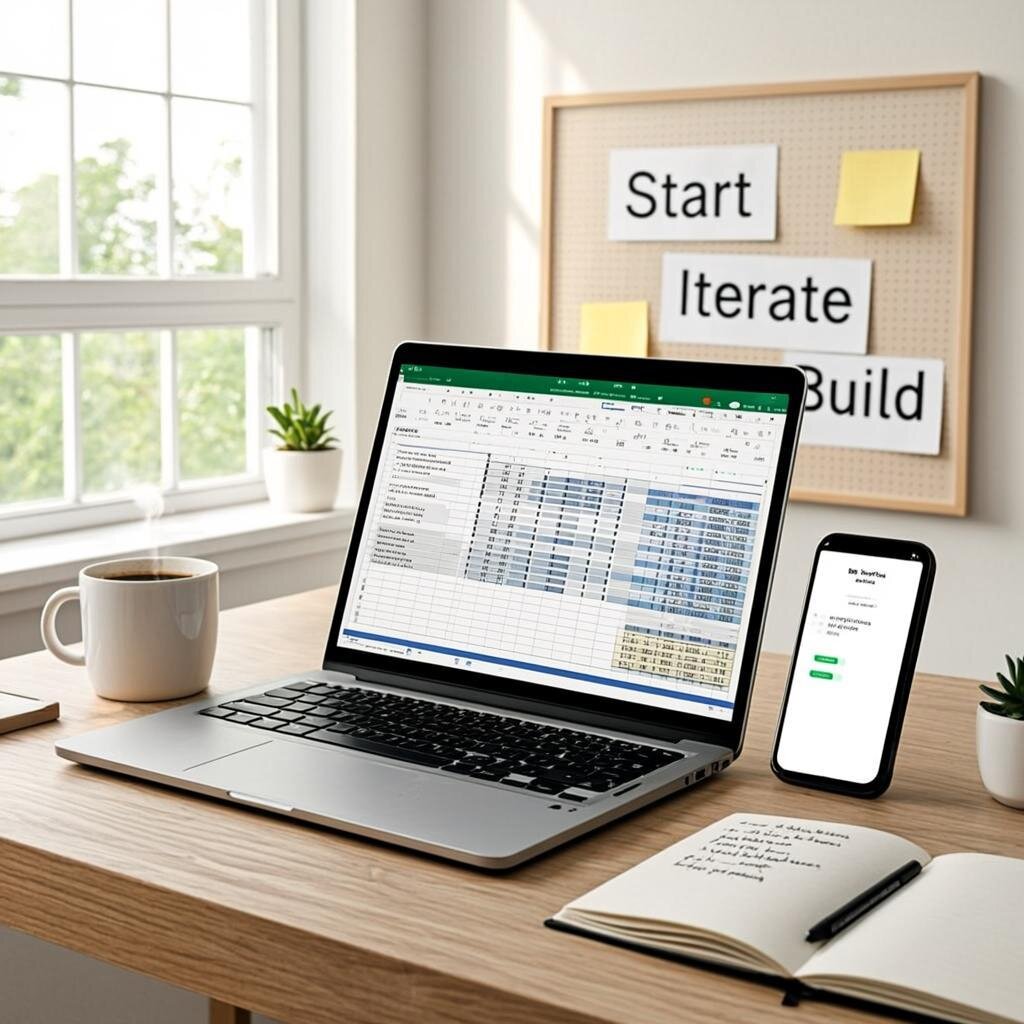
Why 2026 Isn’t Just Another Year for Side Hustles
If you’ve been telling yourself that 2026 is the year you’ll finally start earning extra income, you’re not alone—and more importantly, you’re not too late. But here’s what nobody is telling you: the side hustle landscape has fundamentally shifted. We’re no longer in the era of driving for rideshare apps or selling handmade crafts on Etsy as your only options. The convergence of AI assistants, the creator economy maturation, and the rise of micro-entrepreneurship has created what economists are calling the ‘Side Hustle Renaissance.’
What makes 2026 unique is accessibility. Three years ago, starting a side hustle required either specialised skills or significant upfront investment. Today, AI tools have democratised everything from content creation to code writing. A complete beginner can now compete in spaces that were previously walled gardens. The barrier to entry hasn’t just lowered—it’s been completely reimagined.
But with this accessibility comes a new challenge: choice paralysis. When everything is possible, knowing where to start becomes the actual hurdle. This guide cuts through the noise.
The Mindset Shift: You’re Not Starting a ‘Side Hustle’—You’re Building a Micro-Business
Here’s the first surprising insight: the term ‘side hustle’ might actually be holding you back. The word ‘hustle’ implies exhaustion, grinding, and trading time for money. In 2026, the most successful beginners aren’t hustling—they’re building systems.
Consider Sarah, a primary school teacher from Manchester who started in January 2026. Instead of picking up tutoring gigs (trading hours for pounds), she created a set of downloadable phonics resources using AI design tools. She spent 20 hours creating the materials upfront, and now earns passive income whilst sleeping. Her mindset wasn’t ‘how do I work more hours?’ but ‘how do I create something once that sells repeatedly?’
This shift from active to passive, from time-for-money to asset-building, is the foundation of 2026’s best side hustles. Before you choose what to do, decide what you’re building: a job replacement or an asset. Both are valid, but they require completely different approaches.
The 2026 Side Hustle Landscape: What’s Actually Working Right Now
Forget what worked in 2023. The side hustles generating real income in 2026 look different. Here are the categories actually delivering for beginners:
**AI-Augmented Content Creation:** With AI tools now capable of generating first drafts, editing videos, and creating graphics, beginners are building content businesses in record time. The opportunity isn’t in generic AI content—there’s enough of that. It’s in using AI to amplify your unique perspective. A finance enthusiast using AI to help research and structure content about personal finance for young professionals is creating value, not noise.
**Digital Product Ecosystems:** The real money in 2026 isn’t in single products but in ecosystems. A beginner might start with a £15 notion template, then add a £47 video course, then a £97 community membership. Each product feeds the others. Platforms like Gumroad and Ko-fi have made this accessible to complete beginners.
**Local AI Consulting:** Small businesses know they should be using AI but don’t know how. If you’ve spent a weekend learning to use ChatGPT, Claude, or Midjourney effectively, you know more than 90% of local business owners. Offering ‘AI setup sessions’ for £150-300 is a legitimate side hustle that requires almost no startup costs.
**Niche Newsletter Sponsorships:** Email newsletters have become the unexpected goldmine of 2026. Platforms like Beehiiv make it simple to start, and once you hit 1,000 engaged subscribers in a specific niche, sponsorship opportunities follow. The key is specificity—’AI tools for UK solicitors’ will outperform ‘technology news’ every time.
The Beginner’s Toolkit: What You Actually Need (And What You Don’t)
One of the biggest traps in 2026 is over-investing before you’ve earned a pound. Let’s be clear about what you need versus what you think you need.
**What You Actually Need:**
– A laptop or smartphone (you already have this)
– One AI tool subscription (£15-20/month)
– One platform account (depending on your chosen hustle)
– A dedicated email address
– A notebook for ideas and tracking
**What You Don’t Need:**
– An LLC or limited company (start as a sole trader)
– Expensive courses (the information is free; you need implementation, not education)
– Professional branding (your personality is your brand)
– Multiple social media accounts (master one platform first)
– A website (use platform tools until you’re earning consistently)
The total startup cost for most 2026 side hustles should be under £50. If you’re spending more, you’re consuming instead of creating. The best investment isn’t equipment—it’s time spent actually building.
Your First 30 Days: A Practical Roadmap
The biggest mistake beginners make is trying to do everything at once. Here’s a focused 30-day plan that actually works:
**Days 1-7: Research and Decide**
Spend one hour daily exploring your chosen niche. Don’t create anything yet. Read what exists, note what’s missing, and identify your unique angle. Your angle isn’t ‘I’ll do it better’—it’s ‘I’ll do it differently’ or ‘I’ll do it for a specific audience.’
**Days 8-14: Create Your Minimum Viable Product**
Whatever your hustle, create the simplest version possible. For digital products, this might be a 5-page PDF. For services, it’s a basic offering page. For content, it’s your first three pieces. The goal isn’t perfection—it’s existence. You can’t improve what doesn’t exist.
**Days 15-21: Launch to a Tiny Audience**
Don’t wait for a big launch. Share what you’ve created with 10-20 people. Friends, family, online communities—anyone who’ll give honest feedback. The goal is to learn what resonates and what confuses. Adjust based on real responses, not assumptions.
**Days 22-30: Iterate and Expand**
Based on feedback, improve your offering. Then create your second product or service. The magic happens in the iteration. Most successful side hustlers report that their third or fourth attempt was when things clicked—not their first.
Throughout this process, track everything. How long did tasks take? What generated interest? What felt energising versus draining? This data informs your next 30 days.
The Hidden Economics: Understanding Real Income Potential
Let’s talk honestly about money. The internet is full of claims about £10,000 months, but what can a beginner actually expect in 2026?
**Month 1-2:** £0-50. You’re building, not earning. This is normal and expected.
**Month 3-4:** £50-200. Your first sales happen. The excitement is real, but the income isn’t life-changing yet.
**Month 5-6:** £200-500. Patterns emerge. You know what works and can double down.
**Month 7-12:** £500-1500. With consistency, this is achievable. Some earn more, some less.
**Year 2:** £1000-3000 monthly becomes realistic if you’ve stayed consistent.
Notice the trajectory: slow start, gradual acceleration, then compounding growth. This matches the reality of building any asset. The people who fail are those who expect month-6 income in month 1 and quit when it doesn’t appear.
The tax implications matter too. In the UK, you can earn £1,000 from trading or property income tax-free under the trading allowance. Beyond that, you’ll need to register for Self Assessment. Keep records from day one—it’s far easier than reconstructing them later.
Avoiding the 2026 Traps: What’s Changed and What Hasn’t
Every era has its side hustle traps, and 2026 is no exception. Here’s what to avoid:
**The AI Dependency Trap:** AI is a tool, not a business. If your entire side hustle relies on copying what AI generates, you have no moat. The value isn’t in the AI output—it’s in your curation, personality, and audience understanding. Use AI as an assistant, not a replacement for human insight.
**The Course Consumption Trap:** There’s an entire industry selling ‘how to make money’ courses to people who never implement. In 2026, with AI able to summarise any topic, paying £497 for a course is rarely necessary. The knowledge is available; what you’re often paying for is accountability. If that’s what you need, find an accountability partner instead—for free.
**The Platform Dependency Trap:** Building exclusively on someone else’s platform is risky. Algorithm changes can erase your audience overnight. The solution isn’t avoiding platforms—it’s using them to build something you own. Convert social followers to email subscribers. Use marketplace sales to build a customer list you control.
**The Comparison Trap:** Social media shows you people’s highlight reels, not their struggles. The creator earning £5,000 monthly probably spent two years earning nothing first. Your chapter 1 compared to their chapter 20 is a recipe for discouragement. Track your progress against your past self, not someone else’s present.
Building for Longevity: From Side Hustle to Sustainable Income
The final piece that most guides miss: sustainability. Burnout is the silent killer of side hustles. Here’s how to build something that lasts beyond the initial enthusiasm.
**Align with Energy, Not Just Opportunity:** The best side hustle for you isn’t necessarily the most profitable one—it’s the one you’ll still want to do in month eight when motivation wanes. Choose something that genuinely interests you, not just something that ‘should’ make money. Curiosity sustains what discipline starts.
**Build in Public:** Documenting your journey serves multiple purposes. It creates content, builds an audience, provides accountability, and attracts opportunities. The ‘build in public’ movement has created countless success stories precisely because it combines marketing with authenticity.
**Create Systems Early:** The difference between a side hustle that scales and one that plateaus is systems. From day one, document how you do things. What’s your content creation process? How do you handle customer questions? These documented processes become the foundation for either automation or delegation later.
**Plan Your Evolution:** The side hustle you start with won’t be the one you end with—and that’s okay. Plan to evolve. Your first product teaches you about your audience. Their responses teach you what to create next. Each iteration gets closer to the sweet spot where your skills, their needs, and sustainable income intersect.
Starting a side hustle in 2026 isn’t about finding the perfect opportunity—it’s about starting, learning, and adapting. The best time to plant a tree was twenty years ago. The second best time is now. The tools have never been more accessible, the barriers never lower, and the opportunities never more diverse. Your future self will thank you for starting today.
![Como viver com menos do que você ganha [sem se sentir miserável]](https://productivepathblog.com/wp-content/uploads/2026/05/How-to-Live-Frugally-PTqOcG-559x1024.jpg)
