
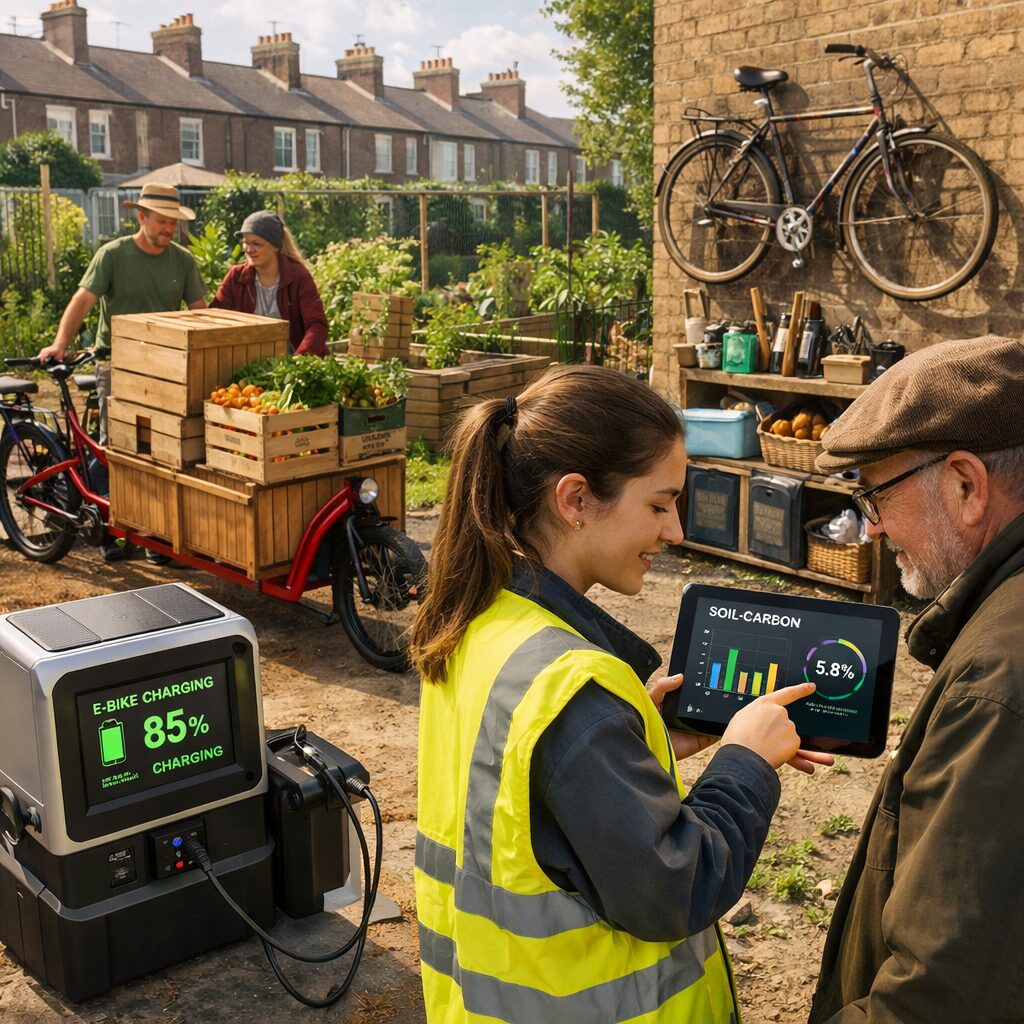
Why 2026 Is the Right Moment for Green Side Hustles
Policy, tech and consumer habits have shifted in ways that make low-carbon side incomes not just ethical, but lucrative. Governments across the UK and EU have expanded payments for ecosystem services, councils are outsourcing zero-waste pilots, and businesses increasingly buy verified sustainability credits from micro-providers. Meanwhile, cheaper sensors, accessible machine learning and widespread electric transport mean small operators can run efficient, accountable green services from a phone or a garage. For anyone seeking extra income, the new reality is that sustainable work can outcompete many traditional gig roles on pay, predictability and long-term demand.
This is not nostalgia for ‘going green’ but a structural pivot: the market now prices circularity and verified impact. Side hustlers who combine practical environmental skills with basic digital literacy can capture multiple revenue streams (fees, product sales, service subscriptions, impact payments) and build reputational capital that scales faster than commodity gigs.
Circular-Economy Microenterprises: Repair, Upcycling and Material Brokerage
Repair cafés and mobile repair services are back with commercial muscle. Instead of occasional volunteer sessions, trained repairers can monetise through subscriptions, targeted social media ads and partnerships with housing associations. A small repair business that specialises in electronics or textiles can charge modest fees while saving clients money and reducing landfill volumes.
Upcycling fashion and furniture remain strong earners — but with a 2026 twist: platforms now allow proof-of-origin tracking. Side hustlers can source discarded items, refurbish them and issue a digital provenance token to increase resale value. Equally profitable is becoming a material broker: collecting pallets of post-industrial offcuts or surplus paint and selling them to designers and community projects. This requires minimal capital but rewards logistical savvy and local network-building.
Carbon Farming, Urban Tree Credits and Micro-Offsets
Landowners and urban gardeners can turn stewardship into income. Carbon markets have matured to accept small, verifiable sequestration projects: planting hedgerows, restoring peat patches or adopting agroforestry practices. Side hustles include project aggregation (bundling several small plots to meet verification thresholds), soil carbon testing services and running community tree-planting schemes that sell micro-credits to local businesses.
Importantly, buyers increasingly demand high-integrity credits — side hustlers who combine transparent monitoring (drones, simple soil sensors) with clear local co-benefits (biodiversity, flood mitigation) command premium prices. For city dwellers, creating and marketing ‘urban tree credits’ tied to local air-quality improvements is a surprising, locally resonant revenue stream.
Waste-as-a-Service: Community Composting and Food Rescue
Food waste is a perennial environmental problem and a persistent income opportunity. In 2026, councils and cafes prefer contracted micro-operators who provide weekly food-rescue runs, commercial compost collection and finished-compost sales. A subscription-based community composting service — pick-up, processing and return of finished compost in branded bags — can be started with modest kit and a small processing licence.
Another angle is value-capture from rescued food: partnering with community kitchens, fermenters and pet-food producers, side hustlers can turn surplus produce into shelf-stable goods or low-cost protein feeds. Platforms now exist to list rescued goods, providing a simple route to customers and municipal partners.
Electric Mobility and Micro-Logistics with a Green Premium
E-bikes and electric vans have made sustainable last-mile logistics profitable for independents. Beyond parcel delivery, niches include zero-emission catering supply runs, plastic-free grocery deliveries and subscription-based farm-to-door veg boxes. Operators earn more by branding their service as certified low-carbon and partnering with local producers.
A novel 2026 opportunity is ‘charging brokerage’: side hustlers who manage small fleets of chargers (home or street-facing) and offer time-of-use optimised charging to e-bike couriers or neighbourhood EV owners. With dynamic pricing and simple scheduling apps, a handful of chargers can produce steady passive income with low maintenance.
Regenerative Gardening Consultancy and Micro-Training
Interest in edible and regenerative gardening continues to rise. Homeowners and community spaces want to convert lawns into productive habitat but rarely know where to start. Offering short, project-based consultancy — soil improvement plans, water-harvesting design, pollinator planting templates — is a profitable low-overhead side hustle.
Deliverables can be small: a two-hour site visit and digital implementation guide, followed by a monthly maintenance advisory subscription. Add-ons include selling tailored seed mixes, compost tea kits and seasonal workshops. Tech tools such as satellite imagery and simple garden-mapping apps let consultants offer professional, scalable advice without heavy capital investment.
Digital Green Services: Verification, Storytelling and Micro-Consulting
A less-obvious but high-margin set of opportunities sits at the intersection of storytelling and verification. Small businesses and community projects need credible claims: carbon footprints, plastic accounting and supply-chain traceability. Freelancers who can run quick audits, produce accessible impact reports and help organisations create verified green narratives are in demand.
Complementary work includes producing short-form video and social content that proves impact (time-lapse of a restoration site, before-and-after waste metrics) and selling micro-consultancy packages to charities and SMEs. These digital services scale well: one well-packaged audit or video can be sold repeatedly to similar clients, multiplying income with low incremental cost.
How to Start with Low Risk and High Impact
Begin with an asset-light pilot: test a compost pick-up route, run three repair appointments, or audit two local cafés for food-waste potential. Use free or low-cost tools for scheduling, GPS tracking and digital invoicing. Prioritise partnerships — schools, housing associations and small retailers are often keen to trial sustainable services.
Crucially, measure and communicate impact from day one. Even simple KPIs (kg of waste diverted, trees planted, kWh saved) increase perceived value and justify higher pricing. Reinvest early profits into equipment or certification that unlocks larger contracts (a commercial composting permit, soil testing kit, or a high-quality e-bike) and scale deliberately.
Future-Proofing Your Green Side Hustle
Diversify revenue models: combine one-off fees with subscriptions, product sales and local impact funding. Keep an eye on evolving regulations — many green side hustles become more valuable as local authorities mandate recycling or require verified offsets. Finally, build transparency into everything: clear metrics, customer testimonials and documented environmental outcomes will protect you from greenwash accusations and turn one-off customers into loyal advocates.
In 2026, the most successful side hustles will be those that solve local environmental problems while delivering verifiable benefits. For ambitious part-timers, that convergence of purpose and profit offers one of the most resilient ways to earn extra income.
![Como viver com menos do que você ganha [sem se sentir miserável]](https://productivepathblog.com/wp-content/uploads/2026/05/How-to-Live-Frugally-PTqOcG-559x1024.jpg)
