
Introduction: Why Stories Matter More Than Strategies
When people search for ‘best side hustles to make extra income in 2026’ they expect lists, platforms and projected earnings. What they rarely get is the human texture behind those numbers. This piece begins with the premise that side hustles are not merely transactions but transformations — pivots that rescue confidence, rewire careers and rebuild communities. The following sections trace real‑feeling journeys (composite but rooted in contemporary trends) that reveal how technology, policy and culture have shaped the side‑hustle landscape in 2026.
Reading these narratives will change how you evaluate opportunities. Instead of asking ‘Which hustle pays most?’, ask ‘Which fits the life you want to build?’ The answers are often found in the stories of those who’ve stitched side income into the fabric of ordinary life.
The Caretaker Who Became a Micro‑Clinic Founder
Maria worked full time as a care assistant in Liverpool. When local NHS pressures grew, she started documenting everyday, practical nursing tips on short video clips during her breaks. Initially it was therapeutic — a way to honour the small wins of her shift. By 2026, those videos evolved into a subscription micro‑clinic: a curated platform offering bite‑size training for family carers, charging a modest monthly fee and a pay‑what‑you‑can tier for those who couldn’t afford it.
The money was useful, but the deeper change was professional recognition. Maria negotiated better hours at work, used earnings to fund a professional qualification and cofounded a cooperative that employs other carers to create content. Her story shows a pattern: side hustles that start as creative outlets and solve real local problems tend to compound socially and financially.
From Factory Floor to Freelance Robotics Tutor
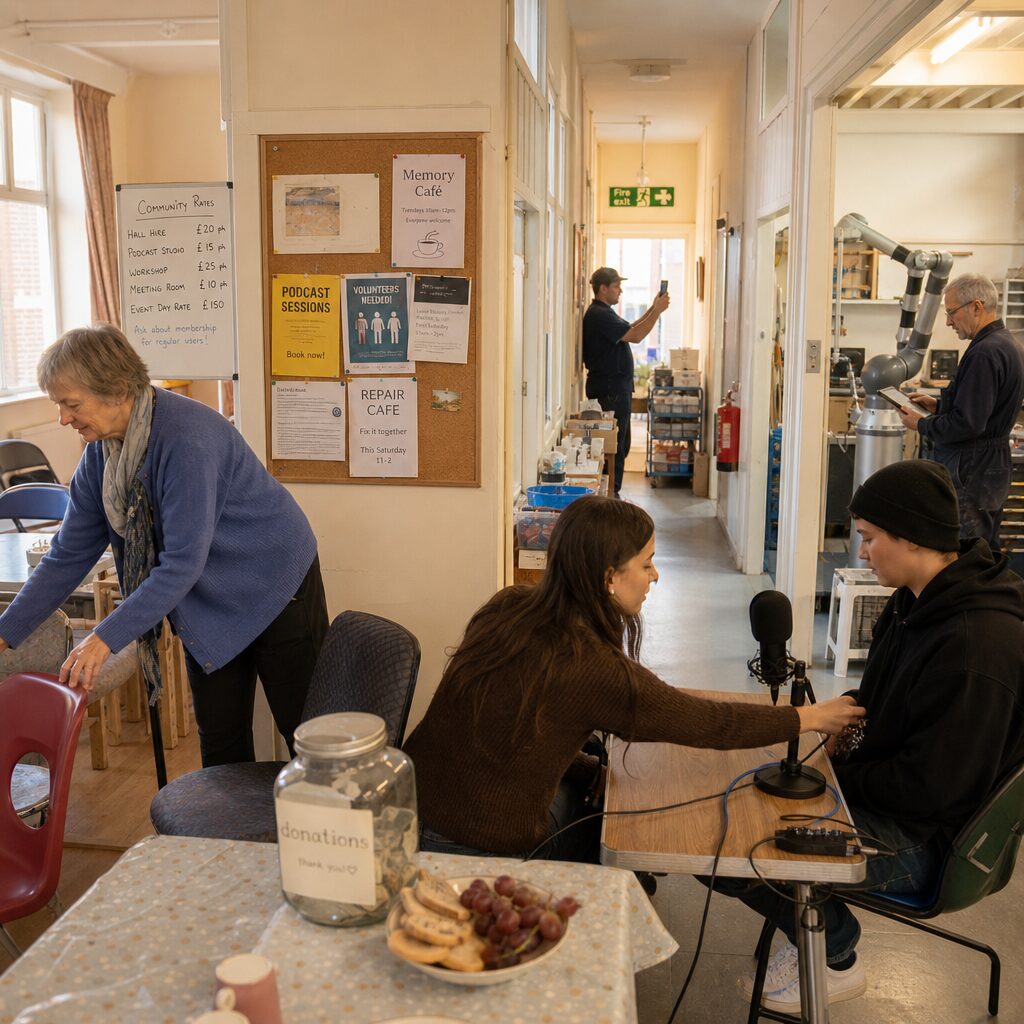
Adeel was a machinist whose employer introduced collaborative robots that threatened his role. Rather than fight automation, he learned to program the cobots and began tutoring colleagues in evening classes. He advertised short, project‑based lessons online and soon attracted small manufacturers seeking affordable upskilling for shifts. By 2026, Adeel’s weekday work remained on the floor, but his evenings and Saturdays were filled with remote one‑to‑one lessons and weekend intensive workshops.
The income was steady, but the real benefit was agency: Adeel controlled his rates, selected clients and used platform revenue to open a local makerspace. His journey illustrates a recurring 2026 theme — side hustles as adaptive responses to technological disruption, where workers convert threatened skills into marketable expertise.
The Retired Teacher Who Runs Memory Cafés and a Podcast
After retirement, Joan found herself missing the rhythms of the classroom. She started hosting weekly ‘memory cafés’ in her village hall — gentle gatherings where older adults shared stories prompted by objects or songs. Attendees paid a small donation; local councils and health charities later sponsored sessions. Joan also launched a podcast featuring those conversations, with careful consent and editorially sensitive storytelling.
The dual model — local, convivial meet‑ups plus a monetised digital product — generated modest income but enormous social capital. Joan used proceeds to fund community transport for participants and hired a young producer from a university internship scheme. Her story highlights how 2026 side hustles often blend purpose and profit, with ethical design and community reinvestment as central principles.
The Solopreneur Designer Who Monetised Vulnerability
Kai, a freelance UX designer, lost a long‑term contract in 2024 and slid into months of instability. Instead of producing yet another portfolio, he began writing candid fortnightly essays about freelancing anxieties, payments, and negotiation failures. Readers responded; a small subscriber base formed. Kai repackaged his insights into micro‑courses on pricing psychology and boundary setting for creative freelancers. His approach wasn’t glamorous — a mix of SEO, newsletter care and live Q&A sessions — but it proved resilient.
By 2026, Kai’s story demonstrated the power of authenticity. The most durable side hustles emerged from people willing to be vulnerable, offering practical help born from lived failure. Platforms amplified the message, but trust converted followers into paying learners.
Patterns and Practical Lessons from the Stories
Several common threads link these journeys:
• Problem‑first, product‑second: Most successful side hustles solved immediate local or sectoral problems rather than chasing trendy platforms.
• Layered monetisation: Combining micro‑payments, subscriptions and public funding or sponsorship created stability.
• Reputation economy: Earnings followed credibility. Side hustles that prioritised quality, consent and community reinvestment scaled more sustainably.
• Skill adjacency: People rarely started in a wholly new field; they translated adjacent skills into marketable services.
For practical steps, start with a small offering that tests demand, document your process (it becomes content), set boundaries early and consider hybrid revenue streams. If you want tools and resources, a good starting hub is the UK government’s small business support pages and community schemes; search for local incubators and digital skills funding via GOV.UK business support.
Ethics, Wellbeing and the Future of Side Hustles
By 2026, conversations about side hustles are less about hustle culture and more about sustainable livelihoods. Our stories emphasise ethical considerations: fair pay for collaborative creators, mental‑health safeguards for solo operators and transparent data practices for those using AI tools. Policymakers and platforms are slowly catching up — offering portable benefits, micro‑grants and clearer independent contractor rules.
Ultimately, the richest side hustles will be those that leave people better than they started: better skilled, more connected and more secure. The human journeys behind the top side hustles reveal that extra income is often a by‑product of community value, not the sole aim.
Conclusion: Choose the Story You Want to Be Part Of
Lists of ‘best’ side hustles are useful, but stories teach the tradecraft. Look for ideas that align with your skills, address local or sectoral needs, and allow you to build trust slowly. Whether you become a micro‑clinic founder, a robotics tutor, a community host, or a candid solopreneur, remember that your side hustle is part of a larger narrative — one that can change your future and the lives of those around you.
If you’d like, I can help you sketch a personalised side‑hustle narrative map based on your skills and commitments.
![Como viver com menos do que você ganha [sem se sentir miserável]](https://productivepathblog.com/wp-content/uploads/2026/05/How-to-Live-Frugally-PTqOcG-559x1024.jpg)
