
A surprising crossover: Why industries are recruiting side hustles
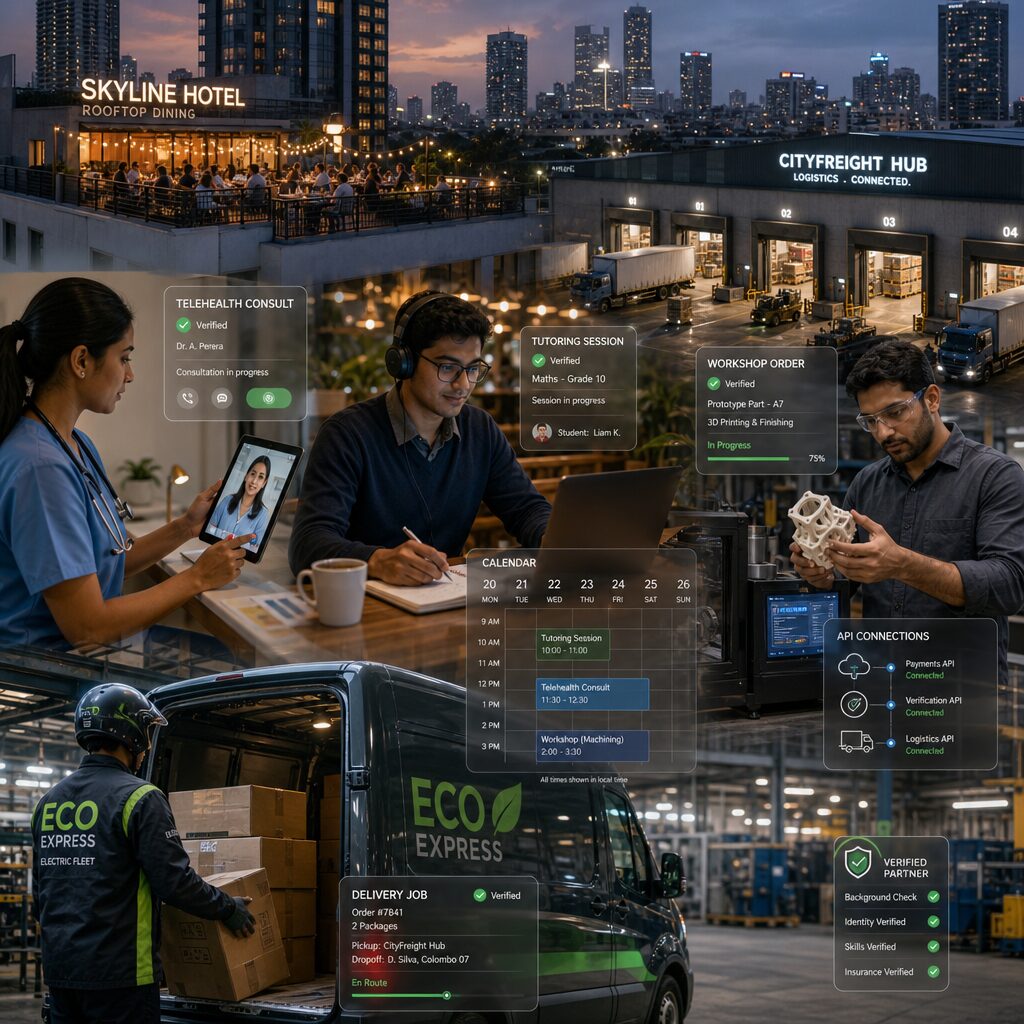
Side hustles have long been framed as individual income streams — freelance writing, ride-hailing, tutoring. In 2026, the narrative has flipped: entire industries are tapping into these micro-enterprises as strategic assets. Faced with tight labour markets, rapid technological change and the need for hyper-local capabilities, businesses are not merely tolerating side hustles among their workers; they are designing programmes that incorporate them into core operations.
This shift is more than pragmatic hiring. It represents a reconfiguration of what work ecosystems look like. Companies now view independent contractors and part-time entrepreneurs as modular resources that can be plugged into supply chains, customer-experience initiatives and R&D experiments. The result is a hybrid workforce where side hustles supply not just spare capacity but specialised skills, innovative thinking and community reach.
Healthcare: micro-specialists and community health ambassadors
Healthcare providers are leveraging gig clinicians and health-focused side hustlers to extend care into communities. Nurses with teletriage side gigs and physiotherapists offering home-visit sessions now partner with hospitals to provide post-discharge follow-up, reducing readmission rates and freeing up clinical capacity.
Besides licensed professionals, community health ambassadors—people running wellness side hustles such as nutrition coaching or group fitness classes—are being enlisted by public health bodies to deliver targeted preventive programmes. These ambassadors use their local networks to increase screening uptake and vaccine awareness, creating trusted touchpoints that traditional outreach struggles to replicate.
Education: modular tutors become curriculum incubators
Tutoring, once a supplemental income stream for teachers and university students, has become a testbed for pedagogic innovation. Schools and online education providers are contracting high-performing tutors from platforms to co-design short modular courses. These side hustlers bring rapid feedback loops from one-on-one teaching into scalable curriculum prototypes.
Industrywide, corporate L&D teams are partnering with subject-matter side hustlers—data scientists who run weekend bootcamps, or creative professionals offering micro-mentorship—to create bespoke upskilling cohorts. This model accelerates skills deployment and taps into practitioners who are actively engaged with cutting-edge tools, rather than relying solely on full-time internal trainers.
Manufacturing and logistics: on-demand micro-operators and the ‘last-mile’ revolution
Manufacturers and logistics firms have adopted skilled side hustles to solve last-mile and peak-demand challenges. Experienced machinists offering contract prototyping, and delivery couriers operating as independent entrepreneurs, are being woven into flexible production models. Small-batch manufacturers contract freelance operators for weekend runs, enabling rapid product iteration without long-term overhead.
Logistics platforms now function as marketplaces that coordinate local micro-operators for same-day distribution, reverse logistics and returns processing. The benefit for firms is twofold: scalability at lower fixed cost, and access to local knowledge that improves routing, customer contact and damage mitigation.
Hospitality and retail: community hosts, micro-curators and experiential commerce
In hospitality, hosts who run pop-up dining experiences or local tour side hustles are being contracted by hotels and tourism boards to provide authentic guest experiences. Retailers partner with micro-curators—independent designers and product reviewers—to create limited-edition drops and in-store events that drive footfall and social buzz.
This reflects a broader trend of experiential commerce where side hustles supply not only products and services but also storytelling and community-building. Businesses gain cultural relevance and bespoke offerings without the capital expense of developing those capabilities in-house.
Technology and AI: platforms turn side hustles into distributed R&D
Tech companies are harnessing developer side hustles for rapid experimentation. Freelance AI engineers and low-code specialists run plug-in marketplaces, building features, automations and microservices that larger firms integrate into their products. Rather than centralised labs, firms now tap distributed innovators who iterate openly and fast.
Moreover, platforms are formalising these relationships with revenue-sharing, certification and API sandboxes, converting hobbyist projects into enterprise-grade extensions. The outcome is a bottom-up innovation engine where side hustlers serve as a continuous source of real-world testing and creative problem-solving.
Regulation, risk and ethics: how industries manage the new ecosystem
As industries embrace side hustles, they must also manage compliance, quality control and ethical concerns. Healthcare and education face licensing and data-protection hurdles; logistics and manufacturing must ensure safety standards; retail and hospitality deal with reputational risk when independent hosts represent established brands.
In response, companies are developing accreditation programmes, digital identity verifications and outcome-based contracts that align incentives. Insurance products tailored for side hustlers and platform-enabled background checks have become standard safeguards, allowing industries to scale these partnerships responsibly.
Strategy for side hustlers: how to position yourself as an industry partner
For people running side hustles, the new industrial appetite creates opportunity—but it requires a shift in stance. Top-performing side hustlers now pitch themselves as B2B partners: emphasising repeatable outcomes, compliance credentials and the ability to integrate with company workflows. Building a clear portfolio, documenting impact metrics and obtaining relevant certifications will open doors to long-term contracts and higher rates.
Additionally, side hustlers who specialise in cross-industry fluency—such as a data analyst who understands healthcare privacy, or a designer versed in retail merchandising—are particularly valuable. Positioning yourself as a bridge between community-level insight and institutional needs is the most defensible niche in 2026.
Conclusion: a hybrid future where side hustles are strategic assets
The most interesting change in 2026 is not that people are taking on side hustles, but that industries have started to redesign themselves around those micro-enterprises. Side hustles are no longer merely personal finances; they are strategic levers for capacity, innovation and customer intimacy.
Organisations that recognise this and build governance, incentives and integration mechanisms will gain flexibility and faster access to niche skills. For side hustlers, the prize is higher-value partnerships and the chance to influence industry practice. The relationship, when managed well, becomes symbiotic: industries gain agility and reach, while independent workers secure premium, mission-aligned revenue streams.
![Como viver com menos do que você ganha [sem se sentir miserável]](https://productivepathblog.com/wp-content/uploads/2026/05/How-to-Live-Frugally-PTqOcG-559x1024.jpg)
