
Why 2026 Is a Turning Point for Green Side Hustles
Policy, tech and consumer preference have converged so 2026 is not like previous gig-economy cycles. New EU and UK regulations require transparency on product lifecycle and recyclability, corporate net-zero targets demand local delivery of sustainability outcomes, and advances in distributed tech (cheap sensors, AI-driven material ID, home battery repurposing) make small-scale environmental services viable income streams. This section outlines the structural drivers that turn environmental skills into repeatable, monetisable side hustles rather than one-off charity work.
First, regulation: extended producer responsibility (EPR) schemes and stricter waste laws create demand for certified collection, auditing and resale of materials. Second, technology: smartphone-based spectrometers, image-recognition for textiles and inexpensive IoT sensors enable high-quality, low-cost diagnostics — skills you can sell. Third, consumer market shifts: growing demand for repair, rental and verified circular products gives side hustlers repeat customers. Understanding these drivers helps you pick hustles with growth potential rather than fads.
High-Value, Low-Carbon Hustles You Can Start This Year
This section lists practical side hustles with an environmental edge, each with the unusual angle that makes them scalable and sustainable.
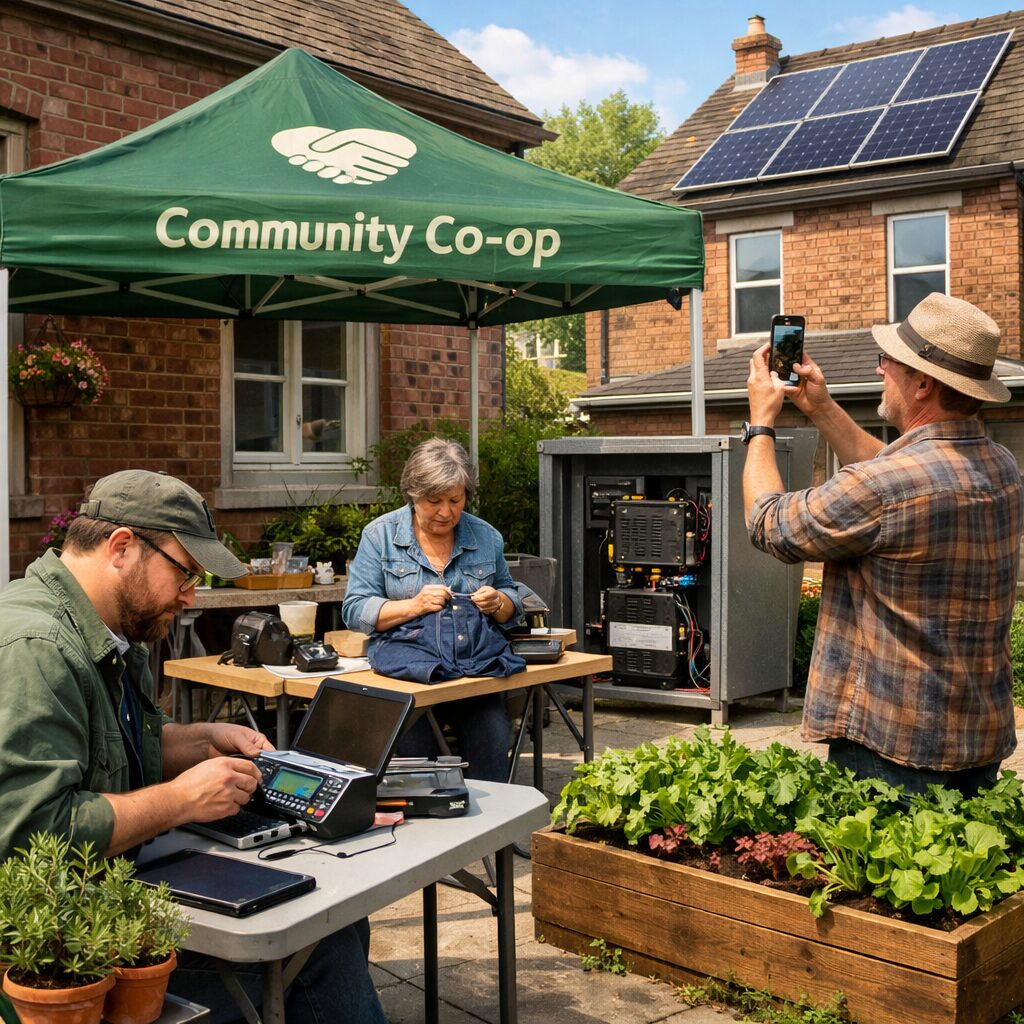
1) E-waste repair and battery repurposing: With EV and consumer battery volumes rising, local battery testing and second-life repacking for stationary storage is lucrative. You can begin by offering mobile diagnostics, then move into aggregated packs for community energy projects. Revenue streams: diagnostics fees, refurbished sales, contracts with local installers.
2) Micro-solar concierge and peer-to-peer brokerage: Many homeowners want panels but are overwhelmed. Offer site surveys, paperwork navigation, and post-installation performance tuning. Connect neighbours to bulk-purchase installers and take a finder’s fee. Use simple tools (irradiance apps, shading analysis) to provide fast quotes.
3) Circular fashion repair & upcycling workshops: Instead of just mending, teach permaculture-style textile restoration and create limited-edition upcycled ranges. Sell repairs via local marketplaces, host paid workshops and licence upcycling kits to cafés or co-ops.
4) Hyperlocal carbon measuring and offsets consultancy for SMEs: Small businesses need credible carbon footprints but cannot afford big consultancies. Offer a flat-fee, standardised carbon audit tailored to high-impact categories (energy, transport, materials) and sell verified local offset or removal projects you help implement.
5) Urban foraging, edible landscaping and micro-farming: Transform neglected plots into productive spaces with low-input, high-yield techniques (food forests, mushroom logs). Income comes from CSA subscriptions, farmer’s market produce and biodiversity credits from local councils.
Each of these hustles pairs a technical skill with a local market and low embodied-carbon service model, so your work reduces emissions as it earns money.
Designing Services That Prefer People Over Freight
A surprising way green side hustles outperform traditional gigs is by substituting digital or local expertise for shipping and new production. Think consultancy, diagnostics, and experiential services instead of couriered goods. For example, rather than selling physical upcycled goods online (which incurs packing and shipping emissions), host neighbourhood repair pop-ups or subscription-based workshops where materials circulate locally.
Practical tactics: price per-participation rather than per-item; partner with local cafés and libraries to host low-cost events; convert one-off customers into memberships (monthly repair clinics, seed swaps). These models both cut carbon and increase lifetime customer value, making them more profitable per hour than distant e-commerce.
Trust Signals: Certification, Verification and Digital Provenance
Buyers of environmental services are more risk-averse — they want proof their spending delivers impact. This section explains affordable ways to build credibility that most side-hustle guides overlook.
– Low-cost certifications: take online micro-credentials in carbon accounting (eg, courses offered by universities and platforms) and display them prominently.
– Material provenance: use smartphone spectrometry apps or simple lab partners to produce material-ID reports for upcycled items; include QR codes linking to a short traceability page.
– Local partnerships: collaborate with community energy co-ops or accredited environmental charities to co-brand services and access verified offset or biodiversity projects.
These trust signals justify premium pricing and open business-to-business (B2B) work where margins are higher.
Scaling Without Compromising Sustainability
Growth often means higher emissions — unless you design for scale that preserves low-carbon principles. This section covers scaling methods suited to green side hustles.
– Licensing and kits: develop replicable repair or upcycling kits and licence them to trainers in other towns, keeping production local and small-batch.
– Digital products: create templated carbon-audit tools, e-learning modules, or how-to videos that scale with near-zero marginal emissions.
– Co-operative growth: form multi-stakeholder co-ops to share equipment (e.g. e-repair benches, battery testing rigs) and spread capital costs while maintaining local service delivery.
Avoid rapid expansion that relies on long-distance shipping, centralised warehouses or heavy advertising channels with high embedded carbon.
Getting Started: A 90-Day Plan for the Environmentally Minded Hustler
Here is a concise, practical timeline to launch a green side hustle in three months.
Days 1–14: Market scan. Validate demand with simple surveys, local Facebook groups and conversations at community markets. Identify one neighbourhood need (e.g. textile repair demand or local SMEs needing carbon audits).
Days 15–45: Skills and kit. Take a short certificated course relevant to your chosen hustle, buy or borrow basic tools (spectrometer app subscription, battery tester, sewing machine) and assemble a simple service menu with prices.
Days 46–75: Pilot and iterate. Run two paid pilots (workshop, audit, repair pop-up). Collect feedback, measure emissions saved or waste diverted with a simple template, and create a one-page case study.
Days 76–90: Launch and partner. Use your case study to approach local councils, co-ops and small businesses. Set up a booking page, list services on hyperlocal platforms and offer an introductory membership to convert early users.
This lean approach minimises up-front carbon and financial risk while building the credibility that earns higher rates.
Resources and Links to Scale Ethically
A few targeted resources to speed up credible growth:
– For carbon training and standards: look at university microcredentials and the ISO 14001 frameworks for basic guidance.
– For selling verified local offsets and removals: marketplaces like Pachama or regional registries (check national registries) can be used cautiously alongside local nature-based projects.
– For community energy and microgrid models: resources from local energy co-operatives and the UK Cooperative Energy Network provide templates for shared ownership.
Use these selectively: your aim is credibility, not paperwork overload. Combine one recognised standard with local partnerships and clear, measurable outcomes.
![Como viver com menos do que você ganha [sem se sentir miserável]](https://productivepathblog.com/wp-content/uploads/2026/05/How-to-Live-Frugally-PTqOcG-559x1024.jpg)
