
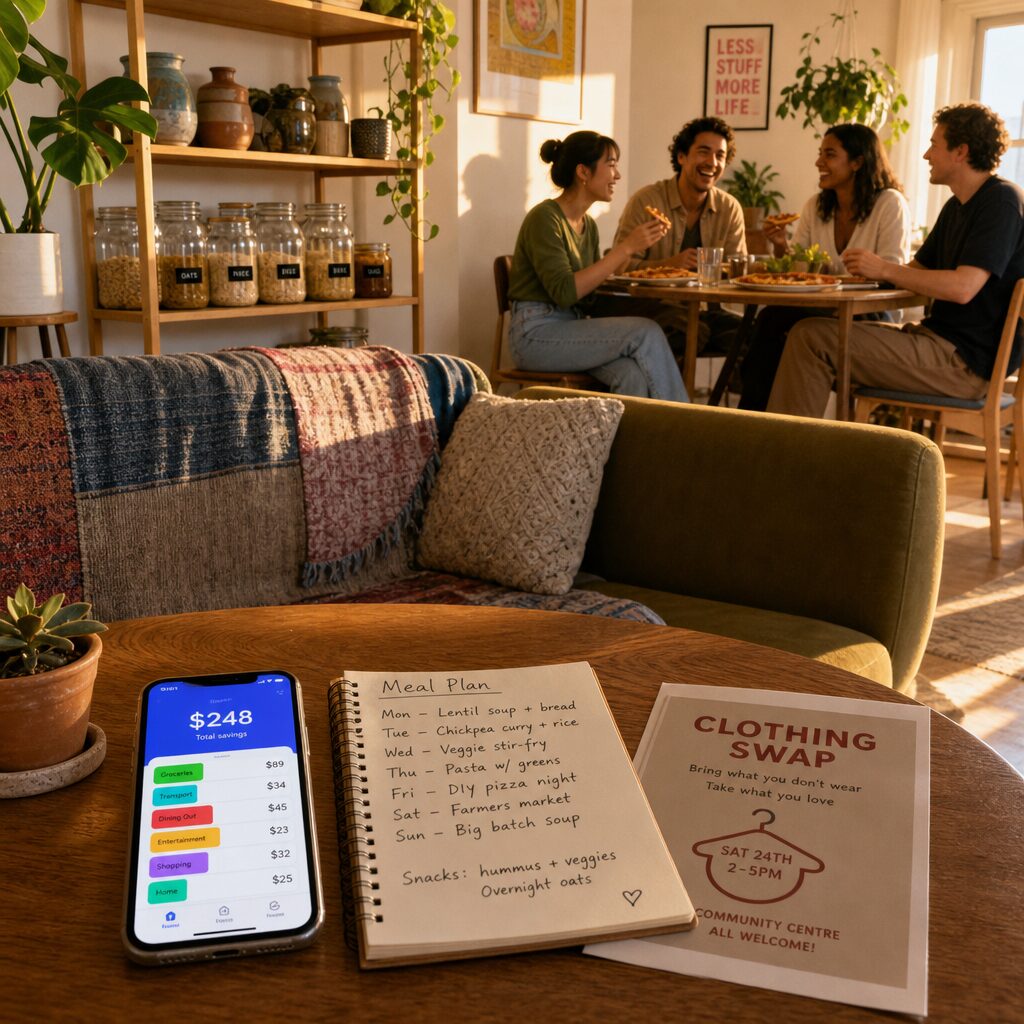
A cultural pivot: saving as status, not sacrifice
What was once framed as deprivation — clipping coupons, turning down nights out — has been reframed as a modern virtue. The rhetoric around “10 smart ways to save money every month” has helped transform saving from a private chore into a public identity marker. Young professionals no longer signal success purely through conspicuous consumption; they advertise their financial savvy through curated routines: bulk-cooking Sundays, second-hand designer hauls, and zero-waste bathrooms. These choices say: I plan, I control, I value experiences over impulse.
This repositioning matters because it dissolves traditional class cues. Thrift becomes aspirational and fashionable; it’s less about necessity and more about taste. That shift changes retail strategies, media narratives and peer interactions — saving is now photographed, hashtagged and taught. In short, saving has become a cultural shorthand for competence and moral worth in contemporary lifestyle discourse.
Technology as ritual: apps, automation and the new domestic choreography
The ’10 ways’ list rarely reads the same twice because technology personalises it. Round-up savings, automated transfers, subscription audits and cashback aggregators have turned financial discipline into a set-and-forget ritual. This automation reshapes daily routines: a morning glance at a budgeting app replaces the old envelope method, and notifications become moral nudges that reinforce habits.
Beyond convenience, this digital scaffolding creates new social rituals. People swap screenshots of savings dashboards the way they once shared holiday snaps. Tech companies exploit this, designing interfaces that make modest wins feel celebratory, thereby gamifying thrift. The cultural consequence is a domesticated fintech aesthetic where spreadsheets look like art and personal finance is a new form of self-expression.
Minimalism, micro-experiences and the decline of mass consumption
The practical tips on cutting monthly costs dovetail neatly with the minimalist trend: owning less, but choosing better. Rather than being an economic imperative alone, monthly savings tactics have helped popularise micro-experiences — short, local, intentionally planned moments of leisure. Weekend escapes, neighbourhood dining, and craft classes replace long-haul holidays and expensive gadgets.
This change has industry-wide effects. Hospitality and retail shift toward tailored, affordable experiences and memberships. Cultural capital accrues to those who can craft meaningful, low-cost narratives about their time. The result is a lifestyle that values curation over accumulation, where saving money is not a restriction but a strategy for richer, more sustainable living.
Aesthetics of thrift: how saving practices shape visual culture
Saving strategies show up in how spaces and people are styled. The second-hand living room, the upcycled wardrobe, the meal-prepped fridge — these are now Instagram-friendly tableaux. Visual culture has absorbed saving into its codes: neutral palettes, handmade accents and visible organisation signal financial prudence as much as taste.
Creators monetise and normalise this aesthetic by offering guides, reels and reels of ‘budget-friendly’ makeovers. The visual language of saving becomes aspirational and instructive, turning economical choices into design trends. Visuals persuade as much as arguments, meaning the aesthetics of thrift accelerate cultural adoption far faster than policy or raw data ever could.
Community economics: sharing, swapping and the revived commons
Monthly saving habits have catalysed a resurgence in communal practices. Neighbourhood swap meets, tool libraries and co-op buying groups turn individual cost-cutting into collective resilience. These adaptations stem directly from the kinds of tips found on ’10 ways’ lists: share consumption, reduce duplication, leverage scale.
This communal turn has social benefits that outlast immediate financial gains. It rebuilds trust, creates local jobs and reframes the household as a node within a caring economic network. Policy-makers and urban planners are noticing: a fiscal culture that encourages shared resources can reduce waste and strengthen civic ties, transforming how cities and suburbs operate.
Work, leisure and the recalibration of time
Monthly savings strategies affect time use as much as money. Budgeting prompts many to rethink working patterns: side hustles, freelance gigs and remote work become tools to protect leisure rather than merely increase earnings. Conversely, saving on leisure by opting for local culture or DIY activities makes free time feel more intentional.
This recalibration reshapes expectations around productivity and rest. The new ethic is not maximal labour for maximal spending, but smarter labour for higher-quality time. Employers respond by offering flexible packages and experience-led benefits, recognising that a workforce committed to intentional saving values time and autonomy differently — often prioritising meaningful downtime over higher pay.
From personal finance to public conversation: media, policy and education
The simple list format of ’10 smart ways’ has proven potent in public discourse. Bite-sized, actionable advice translates well to social platforms and classroom modules, making personal finance a mainstream conversation. Journalists, influencers and educators extract rules of thumb and embed them in curricula, podcasts and municipal campaigns.
This mainstreaming pressures institutions to respond. Financial services introduce beginner-friendly products; schools pilot money-literacy programmes; councils promote community finance clinics. Thus, a cultural meme about monthly savings snowballs into structural change: what began as lifestyle guidance becomes part of social infrastructure.
The ethical dimension: sustainability, inequality and the performative trap
There’s an ethical undercurrent to the popularity of monthly saving tips. On one hand, thrift often aligns with sustainability: doing more with less reduces consumption and waste. On the other, the celebration of saving can mask inequality. Not everyone has the same capacity to cut costs without compromising wellbeing, and performative thrift can stigmatise those who lack options.
A nuanced cultural response is emerging: critics advocate for ‘smart saving with justice’ — strategies that pair individual action with systemic reforms like affordable housing, living wages and accessible childcare. The healthiest cultural trend will be one that blends household prudence with collective responsibility, ensuring saving becomes empowering rather than punitive.
Conclusion: how a list rewired modern living
The humble ’10 smart ways to save money every month’ has become more than a how-to; it is a cultural engine. It reshapes identities, aesthetics, technologies and policies. By translating savings into rituals, visuals, and communal practices, these tips have influenced what people value and how they live.
The broader lesson is that seemingly small practical guides can ripple into large-scale cultural change. When saving becomes stylish, automated and social, it alters not just bank balances but the architecture of daily life — and that recalibration is redefining modern culture for a generation that prizes choice, creativity and resilience.
![Como viver com menos do que você ganha [sem se sentir miserável]](https://productivepathblog.com/wp-content/uploads/2026/05/How-to-Live-Frugally-PTqOcG-559x1024.jpg)
