
A counterintuitive surge: why side-hustle demand isn’t just economic anxiety
Most narratives reduce the rise of side hustles to inflation and stagnant wages. That is true, but partial. In 2026 the primary driver is a structural reshaping of how value is discovered and exchanged. Two simultaneous shifts — algorithmic discovery and hyper-fragmented consumer preferences — have turned small-scale services from obscure extras into high-demand commodities. People no longer go to a single grocery chain or supplier; they curate dozens of micro-experiences. That curation needs labour: micro-hosting, personalised shopping, short-form video education, and on-demand logistics.
This means demand is not solely a reaction to financial pressure. It is a market response to a changed attention economy. Algorithms amplify niche offers rapidly, creating pockets of intense demand where a previously invisible skill becomes immediately lucrative. For prospective side-hustlers, the opportunity is as much about being discoverable as it is about being competent.
Technology: from enabler to demand creator
In 2026 AI is no longer just a tool to automate tasks; it creates entirely new consumer behaviours that generate demand for human services. Generative models power personalised travel itineraries, but consumers still seek human nuance for local quirks. AI composes music demos, yet creators pay human arrangers to add authenticity. This paradox — AI broadening what’s possible while increasing appetite for human curation — is a major growth engine for side hustles.
Platforms have also evolved. Marketplaces now combine reputation, micro-payments and live verification, lowering trust barriers for hyper-local or ephemeral services. The technical costs of launching a gig are near-zero, but algorithmic gatekeepers mediate visibility. That creates a ‘feast-or-famine’ dynamic: a few side-hustlers scale rapidly while many remain micro-earnings. Savvy workers use AI to scale their output (batching, templating, automation) while preserving the human touch that customers pay a premium for.
Labour supply shifts: scarcity, choice and portfolio careers
Post-pandemic labour markets in the UK and beyond are characterised by three trends that favour side-hustles. First, sectoral shortages — particularly in caregiving, skilled trades and logistics — push consumers to outsource micro-tasks. Second, workforce preferences have pivoted towards portfolio careers: people want variety, control and multiple income streams. Third, age demographics mean more retirees and near-retirees are seeking purposeful income rather than full retirement.
These supply-side changes create a robust pipeline of talent willing to take on part-time freelance roles. Importantly, many of these entrants bring deep sector expertise (nurses offering tele-advice, ex-tradespeople doing consultancy), which raises the quality and price of side-hustles compared with earlier gig economy models.
Policy, regulation and institutional shifts shaping demand
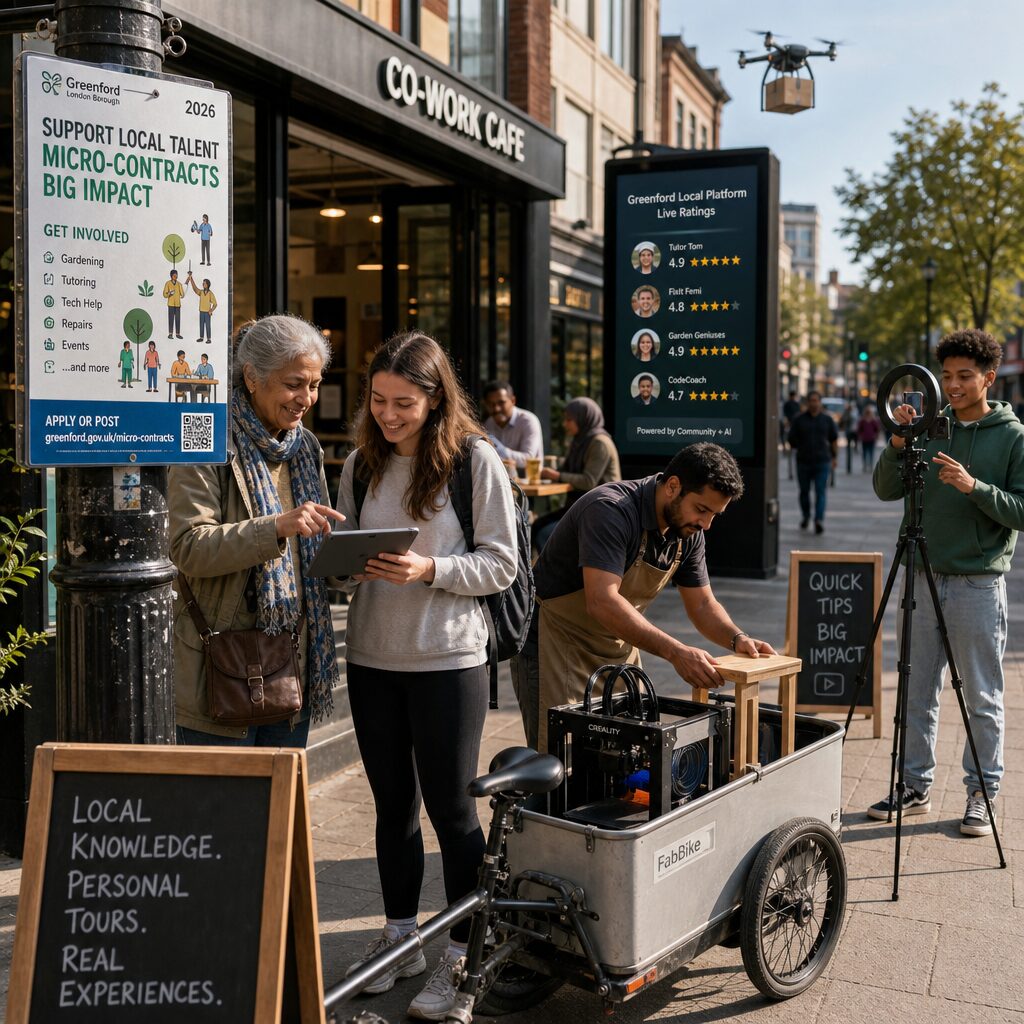
Governments and institutions have begun to recognise the permanence of flexible work. In 2026 some UK local authorities run micro-contract schemes that procure neighbourhood services (green space maintenance, senior companionship) from vetted side-hustlers. Meanwhile, social safety nets and tax regimes have adapted: simpler micro-employer tax flows and clearer rules for platform income reduce barriers to entry.
This institutional legitimisation increases consumer confidence in buying non-traditional services. Where public procurement taps the gig layer for niche needs, private consumers follow. Expect more demand where official frameworks reduce perceived risk and administrative friction.
Where demand concentrates — surprising niches with outsized growth
Not all side-hustles grow equally. In 2026 several niches show disproportionate demand:
– Local experience curators: bespoke neighbourhood tours for micro-communities and remote workers.
– Elder-tech facilitators: hybrid tech support and companionship for digitally isolated seniors.
– Micro-manufacturing consultants: helping creatives move from idea to on-demand production using local fabrication hubs.
– Short-form education creators: bespoke explainer modules for specific workplace tools and soft skills.
These niches combine human empathy, local knowledge or domain depth with platforms that match supply to tiny but intense customer need. The surprising insight is that demand often clusters around tasks where full-time incumbents cannot flexibly respond — not price-sensitive chores, but tasks requiring trust, locality and nuance.
Preparing for 2026 demand: practical pivots for would-be side-hustlers
If you want to capture the growing demand, focus on three actions. First, productise: turn your skill into a repeatable, visible offering with clear outcomes and pricing. Second, learn to work with AI: use it to increase throughput without eroding the bespoke element customers value. Third, build trust signals: micro-credentials, short video demos and local endorsements matter more than ever.
Lastly, think like a matchmaker. Platforms reward those who solve the customer’s discovery problem. Optimise for visibility (searchable descriptions, niche tags, early reviews) rather than only honing craft. In 2026 the difference between a side-hustle that remains a hobby and one that becomes meaningful income is rarely technical skill alone; it’s the ability to be found, trusted and repeatedly chosen.
![Como viver com menos do que você ganha [sem se sentir miserável]](https://productivepathblog.com/wp-content/uploads/2026/05/How-to-Live-Frugally-PTqOcG-559x1024.jpg)
