
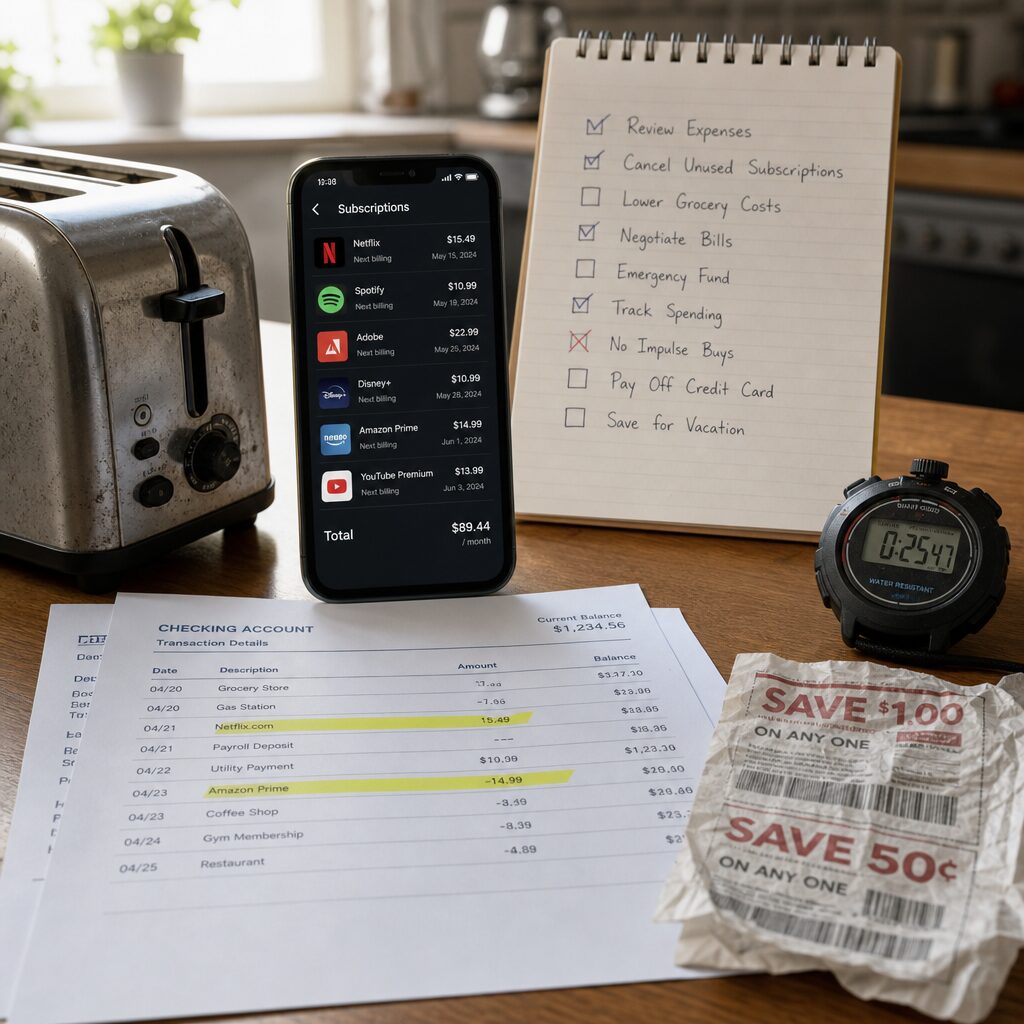
Introduction — Why ‘Smart’ Saving Can Mislead
Not every tip labelled ’10 Smart Ways To Save Money Every Month’ actually saves you money in the long run. Many popular strategies are low-effort clickbait, disguised as thrift but actually erode value, increase stress, or create hidden costs. This article flips the usual advice: instead of listing ten tactics, we train you to spot red flags so you can avoid poor-quality saving strategies and keep the genuinely smart ones.
Think of it as quality control for your finances. A tactic that looks smart at first glance may contain pitfalls such as subscription creep, time-consuming chores with low return, degraded essentials that increase future costs, or promotions that harvest your data. The fewer poor choices you make, the more real, durable savings you achieve.
Common Red Flags That Turn ‘Smart’ into ‘Wasteful’
Red flag: high time cost for low monetary return. If a method consumes hours each month to save a few pounds, calculate your effective hourly rate. Households often overvalue their free time; if you’d be better paid elsewhere, automate or outsource instead.
Red flag: hidden fees and fine print. Many deals hide fees, minimums, or short trial tactics that convert into costly subscriptions. Always read cancellation terms and confirm the total cost over the first 12 months—not just the headline discount.
Red flag: degraded quality leading to replacement costs. Buying the cheapest consumable or service can save money this month but cost more later. For items that affect safety, health, or longevity (mattresses, shoes, cooking equipment), prioritise durability and warranties.
Red flag: behavioural traps. Coupons, cashback and loyalty programmes can induce unnecessary spending to achieve rewards. If a reward requires purchases you wouldn’t otherwise make, it’s not saving.
Red flag: one-size-fits-all hacks. Generic advice—such as ditching coffee, selling possessions, or meal-prepping every day—fails when it clashes with your lifestyle or income volatility. Financial strategies must be bespoke.
Ten Popular ‘Smart’ Ways—and the Red Flags to Spot
1) Cutting subscriptions: The trap is forgetting to cancel trial periods properly, switching to lower-value plans that remove features you actually use, or replacing a subscription with repeated one-off purchases that cost more. Red flag: plan downgrades that break your core needs.
2) Meal-prepping to save on food: Red flag: excessive time commitment, food waste from poor planning, or giving up social meals that maintain wellbeing. Check whether batching meals actually reduces weekly spend versus flexible cooking.
3) DIY instead of professional services: Red flag: false economy when lack of skill causes mistakes needing professional fixes. For complex plumbing, electrical work or taxes, paying a pro can be cheaper long-term.
4) Using coupons and loyalty cards: Red flag: coupons that require minimum spend, or loyalty points that expire. Also watch the psychological push to buy items you don’t need to “unlock” a deal.
5) Downgrading insurance or warranties: Red flag: skimping on cover can cost you far more when something goes wrong. Compare excesses, exclusions and claim histories, not just premiums.
6) Switching energy suppliers frequently: Red flag: exit fees, inaccurate switching quotes, and short-term deals that expire into higher tariffs. Consider supplier reliability and customer service, not only price.
7) Buying cheapest alternatives: Red flag: consumables and staples that save pennies but require more frequent replacement or cause damage (e.g. poor-quality cookware). Track total cost of ownership.
8) Cashback apps and credit card offers: Red flag: higher spending to chase rewards, and potential credit harm from revolving balances. Only use these if they align with an existing budget and you pay the balance in full.
9) Extreme penny-pinching on commuting: Red flag: reduced transport spending that increases commute time, reduces earnings opportunities, or harms health. Evaluate commute costs against income and wellbeing.
10) Aggressive debt repayment without contingency: Red flag: draining emergency reserves to make big debt payments can leave you exposed to unexpected bills, leading to higher-cost borrowing later. Balance repayment speed with cash buffers.
How to Test a Saving Strategy Before Committing
Run a short, measurable trial. If a tactic claims to save you money, apply it for one month with clear metrics: expenses before versus after, time spent, and any qualitative costs (stress, convenience). Use a simple spreadsheet to compare net benefit.
Ask these questions: Does this save net money after factoring time and hidden costs? Is the saving recurring or one-off? Does it compromise safety, health or essential convenience? Who benefits most—the consumer or the provider promoting the tip?
Use primary sources: read full terms, check independent reviews, and seek data rather than anecdotes. If a deal sounds too good, look for trust signals such as regulatory oversight, credible customer feedback, and transparent cancellation procedures.
A Practical Checklist to Avoid Poor-Quality Advice
Before you adopt any new saving habit, run it through this checklist:
– Time vs money: Calculate the hourly value of the time required.
– Total cost assessment: Include fees, replacement cycles and potential penalties.
– Behavioural risk: Will it tempt you to spend more elsewhere?
– Service degradation: Does it reduce necessary quality or safety?
– Exit strategy: Can you stop it easily if it fails to deliver?
If any item ticks a serious warning, deprioritise or redesign the tactic. Often, a small change—like partial automation, a higher-quality purchase, or a trial period—retains most savings while neutralising the red flag.
Conclusion — Prioritise Sustainable, Verifiable Savings
Smart saving is less about chasing trendy hacks and more about avoiding poor-quality shortcuts. By spotting common red flags—time drains, hidden fees, degraded quality, behavioural traps and ill-fitting one-size-fits-all tips—you protect both your money and your life quality.
Adopt a tester mindset: verify claims, quantify costs, and prioritise strategies that deliver durable, low-friction savings. That’s the real intelligence behind the phrase ’10 Smart Ways To Save Money Every Month.’
![Como viver com menos do que você ganha [sem se sentir miserável]](https://productivepathblog.com/wp-content/uploads/2026/05/How-to-Live-Frugally-PTqOcG-559x1024.jpg)
