How to Meal Plan on a [Super Tight] Budget

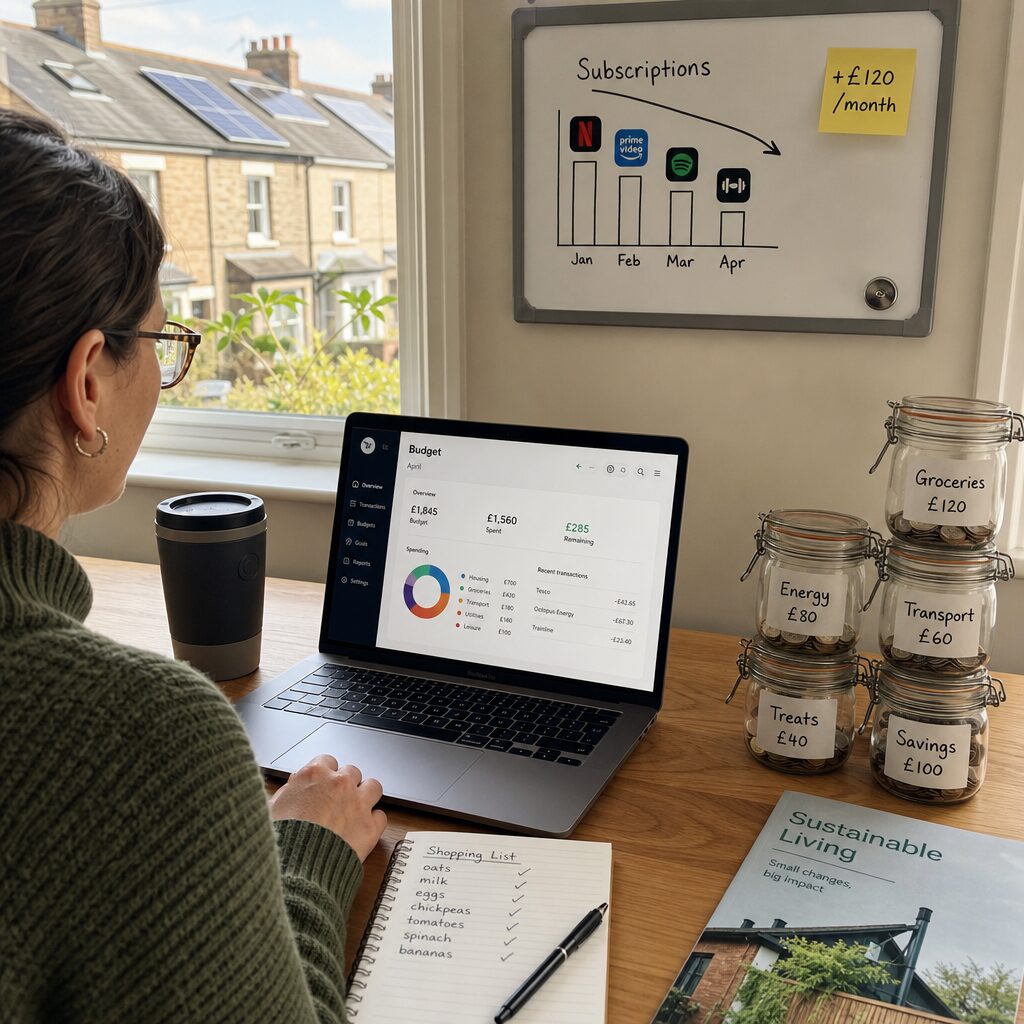
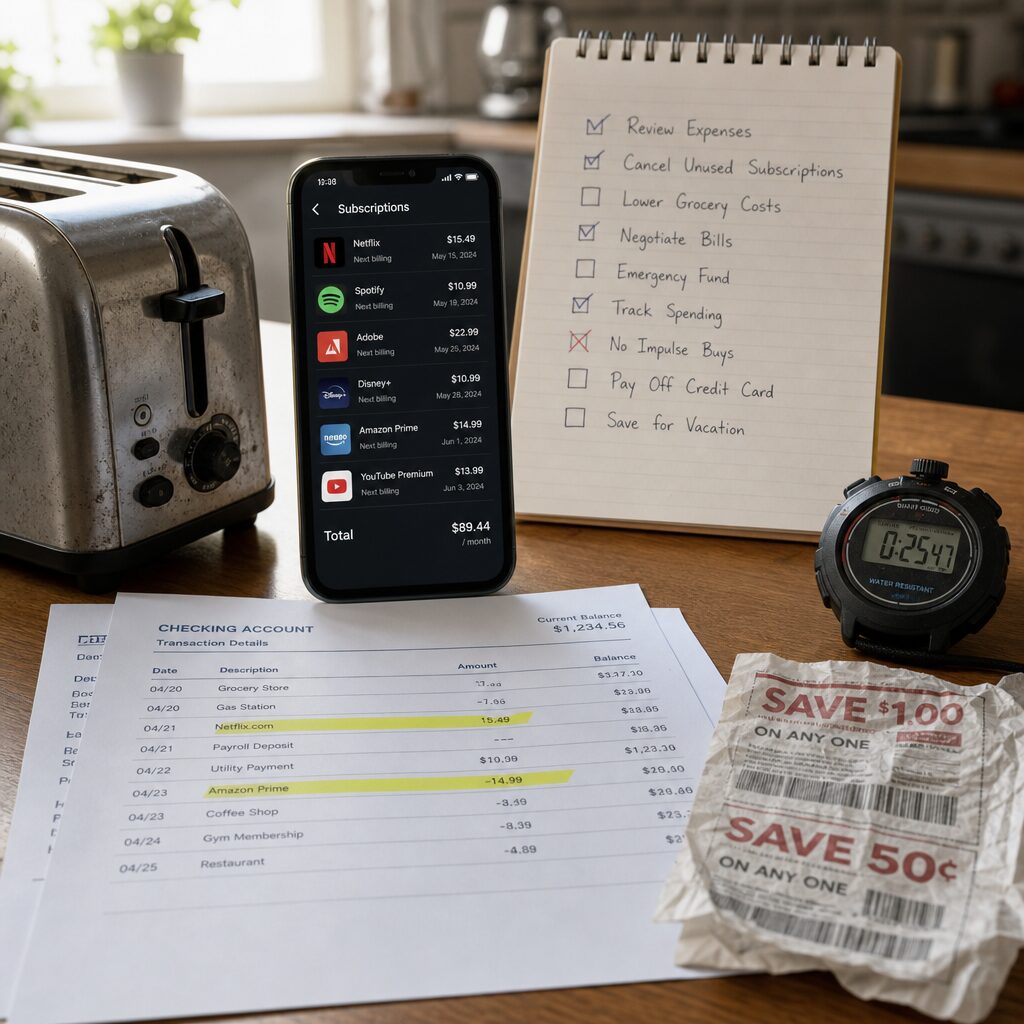
You can feed your whole family tasty, filling meals without overspending or living on takeout. With simple strategies—smart grocery choices, basic meal-prep habits, and a few go-to one-pot or sheet-pan recipes—you can cut costs and still enjoy variety every week. This post shows practical ways to set a grocery budget, pick versatile ingredients, and stretch […]

How to Meal Plan on a [Super Tight] Budget Read More »

A high-resolution, realistic scene in a modern corporate operations centre: a diverse team of professionals clustered around large digital screens displaying interactive dashboards that show month-by-month savings metrics, supplier scorecards, energy usage heatmaps and automated alerts. In the foreground, a product manager sketches a roadmap on a glass wall labelled ‘Monthly Savings Sprints’, while a data scientist points to a machine-learning model predicting recurring cost reductions. Natural light filters through floor-to-ceiling windows; on a side table sits a coffee cup and a small stack of reports titled ‘Run-rate Optimisation Q2’. The overall mood is focused, collaborative and quietly optimistic, conveying precision, habit change and sustainable financial discipline.

Why Businesses Are Treating ‘10 Smart Ways To Save Money Every Month’ as Strategic Infrastructure

Why corporations are treating monthly savings like a strategic product This year many companies have shifted from ad-hoc cost-cutting to packaging monthly savings as a repeatable, measurable product. Rather than one-off projects, firms are assembling cross-functional squads — finance, operations, procurement, data science — that operate like startups whose ‘minimum viable product’ is a verifiable

Why Businesses Are Treating ‘10 Smart Ways To Save Money Every Month’ as Strategic Infrastructure Read More »

A realistic street-scene in late spring: a small group of people at a neighbourhood repair pop-up outside a refurbished brick community hall. One person tests a laptop battery on a compact battery analyser, another mends a denim jacket under a canopy imprinted with a local co‑op logo, while a third measures roof shading with a smartphone app beside a terraced house fitted with a small solar array and a repurposed EV battery in a weatherproof cabinet. Potted herbs, a raised bed of leafy greens and a poster advertising a weekend upcycling workshop complete the scene — sunlight, low-tech tools, and a sense of local circular activity.

Green Side Hustles 2026: How to Earn More by Doing Less Carbon

Why 2026 Is a Turning Point for Green Side Hustles Policy, tech and consumer preference have converged so 2026 is not like previous gig-economy cycles. New EU and UK regulations require transparency on product lifecycle and recyclability, corporate net-zero targets demand local delivery of sustainability outcomes, and advances in distributed tech (cheap sensors, AI-driven material

Green Side Hustles 2026: How to Earn More by Doing Less Carbon Read More »

A realistic photograph of a modern kitchen table at dusk: a laptop with a budgeting app open showing predictive graphs, a smartphone displaying a grocery discount and a smart home hub glowing softly. Beside them, a reusable shopping bag with seasonal vegetables, a smart thermostat manual and a small pile of membership cards for local sharing co‑ops. Warm ambient light, tidy but lived‑in scene, conveying the intersection of technology, everyday life and practical saving.

The Trend‑Driven Toolkit: 10 Ways the Biggest Shifts Right Now Are Rewriting Monthly Saving

Why the ‘how’ of saving has become a cultural trend, not just a habit Saving money every month used to be about willpower and envelopes. Today it’s a cultural and technological ecosystem where social norms, platforms and real‑time data shape what people consider ‘smart’ saving. Three macro forces—ubiquitous data, platformisation of services, and values‑driven consumption—have

The Trend‑Driven Toolkit: 10 Ways the Biggest Shifts Right Now Are Rewriting Monthly Saving Read More »

A crisp, realistic scene of a mid-30s professional at a daylight kitchen table, laptop open with three tabs visible (a productised service page, an accounting dashboard and a niche community forum). A notebook shows a handwritten checklist and a simple contract template. In the background, a small corkboard displays pinned business cards from local clients and a sticky note reading '8–12 week pilot'. The lighting is soft morning sun; the composition balances digital tools with analogue planning to convey pragmatic, expert-driven side-hustle work in 2026.

What Experts Really Recommend: The Practical, Risk-Minded Side Hustles for 2026

Why ask experts in 2026? The shift from trend lists to professional priors Most ‘best side hustles’ lists regurgitate platform names and ROI estimates. Experts — venture operators, tax advisers, university career coaches and veteran freelancers — start elsewhere: they assess your constraints and comparative advantage. In 2026, that professional lens matters more because labour

What Experts Really Recommend: The Practical, Risk-Minded Side Hustles for 2026 Read More »

A sunlit urban kitchen table where three friends gather for a meal-prep session: reusable containers, a laptop open to a budgeting app displaying a green streak, jars of bulk ingredients, a printed list titled 'Subscription Audit', and a repair toolkit in the corner. Soft plants and well-worn ceramics convey curated minimalism; a bicycle helmet leans against a chair, signalling low-carbon transport. The scene captures communal ritual, digital tools and tangible austerity blending into a warm, aspirational lifestyle tableau.

Pockets and Principles: How 10 Smart Monthly Saving Habits Are Reshaping Modern Culture

Introduction: When Frugality Becomes a Lifestyle Saving money used to be a private spreadsheet habit; now it’s a cultural signal. What began as practical tips—pack lunch, cancel subscriptions, automate savings—has morphed into an aesthetic, a set of rituals and digital behaviours that shape how people present themselves and make choices. This section sets the scene

Pockets and Principles: How 10 Smart Monthly Saving Habits Are Reshaping Modern Culture Read More »

A realistic, high-resolution photo: a mid-30s person sitting at a compact home desk at dusk, multiple browser tabs open showing gig platforms, a spreadsheet, and an email draft. On the desk are a notepad with a three-column checklist titled 'Pilot — Scale — Exit', a steaming mug, and a small stack of finance books. A wall calendar behind them marks 90 days. The lighting is warm, emphasising focus and late‑night decision-making; the person’s expression is thoughtful, caught between optimism and fatigue, illustrating the crossroads of enthusiasm and strategy when choosing a side hustle.

Shopping for Side Hustles in 2026? Avoid These Costly Mistakes Before You Buy In

Why ‘Shiny Object Syndrome’ Becomes Costly in 2026 Many shoppers for side hustles chase the latest trend — AI microtask platforms, NFT flips, or new creator-economy tools — expecting quick wins. The mistake: equating novelty with profitability. By 2026 the market is saturated with platforms promising effortless income; early adopters already harvested the low-hanging fruit.

Shopping for Side Hustles in 2026? Avoid These Costly Mistakes Before You Buy In Read More »

A realistic, high-resolution scene of a bustling urban neighbourhood divided into contrasting halves. On the left, small local shops, a second-hand boutique, a busy grocer with private-label displays and a cycle shop crowded with commuters; on the right, quieter restaurant terraces, an advertising billboard for a streaming service marked "Now Cancelled", a petrol station with fewer cars and a utility company office with a digital dashboard showing reduced peak load. Pedestrians of diverse ages carry reusable bags and inspect price tags; a commuter uses a smartphone budgeting app on a bench. The lighting is late-afternoon, casting long shadows and warm tones that emphasise interconnection—signage and reflected windows subtly display graphs and tiny stock-ticker motifs to hint at market effects without overwhelming the human activity.

How Ten Household Saving Habits Reshape Markets: The Economic Ripples Behind Everyday Thrift

Introduction — Small Habits, Big Waves Ten small household choices—stopping a streaming subscription, cycling to work, installing LED bulbs—are usually framed as personal finance wins. But when aggregated across millions, they produce measurable shifts in demand, revenue models and capital flows. This piece tracks the economic ripple effects of ten common monthly saving behaviours, looking

How Ten Household Saving Habits Reshape Markets: The Economic Ripples Behind Everyday Thrift Read More »

A realistic, candid scene: a mid-30s woman setting up a pop-up pottery stall in a bright weekend market. She has a small table with handmade mugs and a sign offering personalisation; a laptop showing her booking calendar sits next to a stack of business cards. Around her, neighbours chat, a child points at a colourful mug, and a passerby drops cash into a tin. In the background, a poster advertises an evening online workshop she runs, hinting at both local presence and digital income. The light is warm, giving the image an intimate, resilient feel—this is income, identity and community being rebuilt one small transaction at a time.

What Side Hustles Quietly Fix: Hidden Problems the Best 2026 Gigs Solve

Introduction: The invisible problems side hustles actually fix Most lists of “best side hustles” focus on dollars per hour or low startup cost. That approach misses why side hustles matter beyond cash. In 2026, with economic uncertainty, AI-driven disruption and shifting lifestyle expectations, the smartest side hustles solve hidden, human problems. This article explores those

What Side Hustles Quietly Fix: Hidden Problems the Best 2026 Gigs Solve Read More »